
Module 1 · Chapter 7
Intercropping and agroforestry
Intercropping and agroforestry, as innovative and sustainable agricultural practices, are essential components of climate-resilient farming. These approaches harness diversity and complementarity to mitigate the impact of climate change on agriculture.
Intercropping, involving the simultaneous cultivation of multiple crop species nearby, maximizes land use efficiency and minimizes vulnerability to erratic weather patterns. This is similar to agroforestry, which integrates trees and shrubs within agricultural systems to provide vital services like shading crops during heat waves and acting as windbreaks during storms. Both practices contribute to improved soil quality through nutrient cycling and are crucial in carbon sequestration to mitigate greenhouse gas emissions.
Intercropping
Intercropping is a well-established agricultural technique characterized by the simultaneous cultivation of two or more crops within the same field [16]. This practice aims to enhance overall crop productivity by capitalizing on available resources and ecological processes that remain underutilized in the case of single-crop cultivation. By growing multiple crops nearby, intercropping maximizes the efficient use of land and resources, ultimately resulting in higher yields [21].
Intercropping can be an interesting way to strengthen the climate resilience of cultivated crops in European conditions. There is many reason for that.
Important is diverse crop mix because intercropping allows for cultivating a mixture of crops with different growth patterns, root structures, and environmental requirements. This diversity can help mitigate the risks associated with extreme weather events, such as droughts and heavy rainfall. For example, a drought-resistant crop can be intercropped with a crop that thrives in wet conditions, ensuring some level of productivity even when weather conditions are less favourable for one of the crops [13].
Intercropping can improve resource efficiency because it enables more efficient water, nutrients, and sunlight use. This is especially important in regions where climate change leads to increased resource availability variability. By complementing the resource needs of different crops, intercropping can ensure that these resources are used more effectively [15].
During the climatic changes, pest and disease management is more difficult. Different crops can disrupt pests' life cycles and reduce disease prevalence. This reduces the reliance on chemical pesticides and helps maintain crop health. In the face of changing pest and disease patterns due to climate change, intercropping can provide a natural defence mechanism [20].
For the long term, plant food production sustainability is important to maintain soil health and increase the potential for carbon sequestration. When intercropping is applied, this technique can improve soil structure and fertility, making it more resilient to extreme weather events. Some intercrops, like legumes, also fix nitrogen, enhancing soil health. Healthy soils are better equipped to withstand the stresses of climate change. Moreover, the enhanced organic matter in soils due to intercropping can contribute to carbon sequestration, which is essential for mitigating climate change [10].
For long-term food security, it is important to maintain crop stability because climate change can increase temperature fluctuations and unpredictable weather patterns. Intercropping can help stabilize crop yields, as the performance of one crop may compensate for the underperformance of another under changing conditions [5].
Economic benefits are also important due to the diversification of farmers' income sources, as they can harvest multiple crops from the same piece of land [14]. This diversity can provide a financial buffer against crop failures or price fluctuations caused by climate-related events.
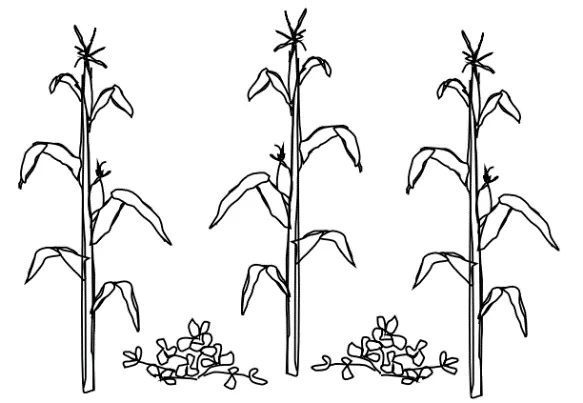
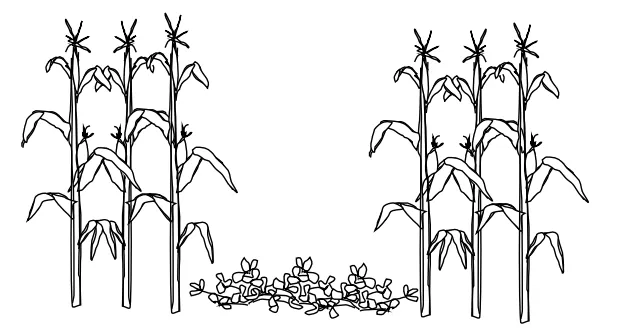
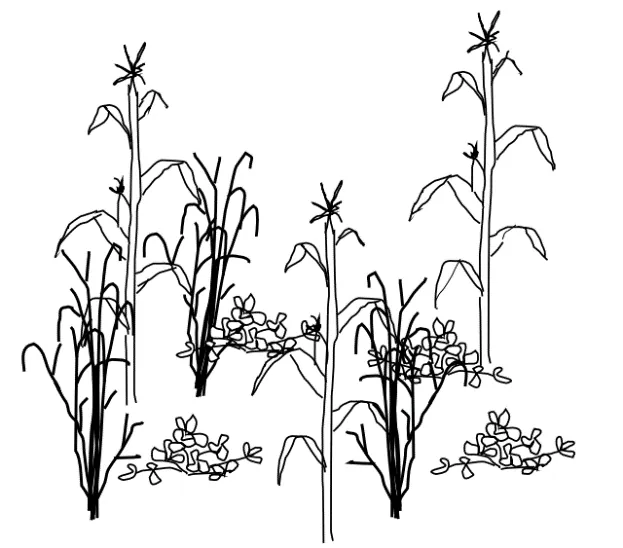
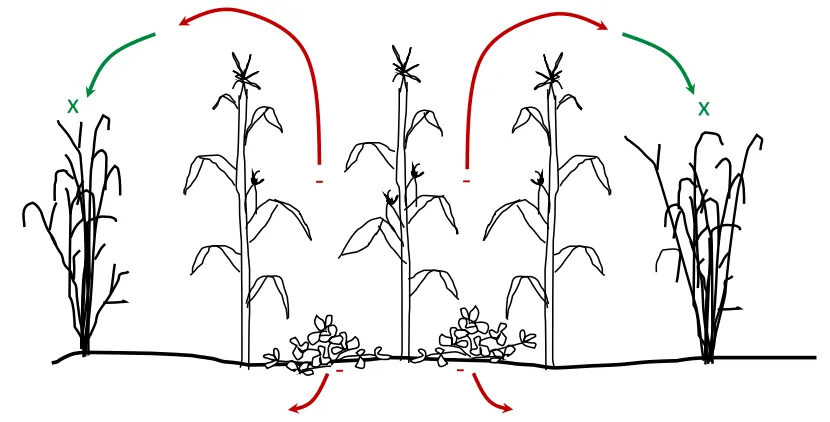
There are different methods of intercropping, including row intercropping, strip intercropping, mixed intercropping, relay intercropping, and push-pull intercropping, each with its unique approach and benefits.
 |
 |
|---|---|
| Row intercropping: The cultivation of two or more crops at the same time with at least one crop planted in rows. | Strip intercropping: The cultivation of two or more crops together, wide enough such that they permit access to separate machinery but close enough for the crops to interact. |
 |
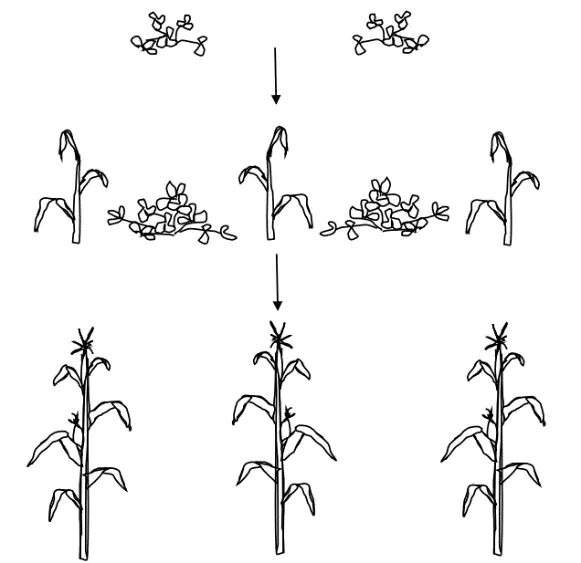 |
| Mixed intercropping: The cultivation of two or more crops together in no distinct row arrangement. | Relay intercropping: Planting a second crop into a standing crop part way through its development but prior to harvesting. |
 |
|
| Push-pull intercropping: A specific system adopted for pest management whereby a ‘trap/pull’ crop attracts pests away from the main crop and a ‘push’ crop aids to repel pests. | |
Figure 1: Intercropping methods (from [3])
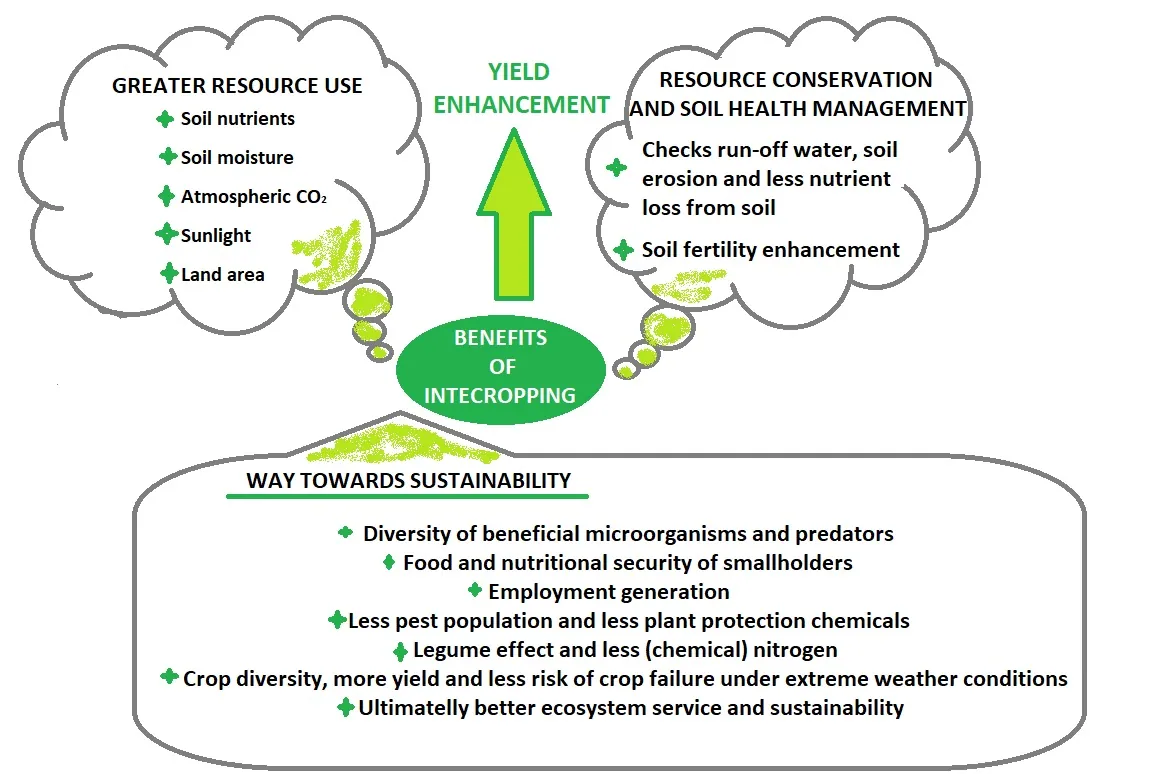
Intercropping, the practice of growing two or more crop species together in a single field, holds increasing significance in European agriculture. It offers multiple benefits, including enhanced biodiversity, improved soil health, reduced pest pressure, and increased resource use efficiency. This method aligns with sustainable and environmentally friendly agricultural practices, a priority in European policy.
The importance of intercropping in European agriculture is underscored by its potential to contribute to food security, climate resilience, and reducing chemical inputs, aligning with EU sustainability goals. Several European countries have promoted intercropping through various support mechanisms, including research funding, training, and agri-environmental schemes.
Shortly, European policy is expected to evolve to support intercropping development further. This could involve more explicit incentives, subsidies, and knowledge-sharing programs to encourage widespread adoption. Additionally, policy changes may focus on streamlining administrative processes and creating a regulatory environment that facilitates intercropping practices. Ultimately, these policy adjustments aim to maximize the benefits of intercropping while contributing to a more sustainable and resilient European agricultural sector.
Agroforestry
It is a sustainable land management practice that combines agricultural and forestry techniques to create integrated and diversified land-use systems. Agroforestry is a sustainable land use system with a promising potential to sequester atmospheric carbon into soil [1]. It has the potential to enhance the resilience of European agriculture to climate change and improve overall sustainability.
Diversifying Crops and Income Sources for Resilience in agroforestry systems offers a dynamic blend of tree and crop species, resulting in farmers' various products and income streams [19]. This diversity is critical in helping farmers adapt to changing climate conditions by distributing risks.
In agroforestry systems, trees play a pivotal role in enhancing water retention and preventing soil erosion, which is of paramount importance when addressing the impacts of droughts and intense rainfall events associated with climate change [7].
Furthermore, agroforestry actively contributes to carbon sequestration by storing carbon in tree biomass and improving soil organic matter, mitigating climate change and reducing greenhouse gas emissions [8].
These systems are also champions of biodiversity, reinforcing the resilience of ecosystems in the face of climate change. Various plant and tree species create habitats for wildlife and beneficial insects, ultimately aiding in pest control [11].
In addition, agroforestry, by offering shade and shelter for crops and livestock, facilitates their adaptation to changing temperature and precipitation patterns [1]. This adaptation proves particularly vital in regions susceptible to extreme weather events.
Integrating trees into agroforestry systems significantly enhances soil fertility and structure, making it more resilient to climate-related challenges such as water stress and nutrient imbalances [6].
Lastly, trees within agroforestry systems effectively regulate local microclimates, moderating temperature extremes and reducing wind damage to crops. This microclimate control is precious in a changing climate [12].
Agroforestry, the practice of integrating trees with crops or livestock, has gained recognition worldwide for its myriad benefits. It is widely utilized in various forms to address sustainable land management and environmental challenges, enhance food security, and mitigate climate change. Agroforestry is practised extensively in Asia, Africa, Latin America, and North America, primarily in developing countries [9]. The most developed regions include sub-Saharan Africa and Southeast Asia, where it is deeply ingrained in traditional farming systems.
In Europe, agroforestry has been increasingly acknowledged for its potential to enhance agricultural sustainability, conserve biodiversity, and provide ecosystem services [4]. Various European Union (EU) programs and national policies support agroforestry initiatives. Countries like France, Spain, and Portugal have been pioneers in promoting agroforestry, often providing financial incentives and technical assistance to encourage its adoption.
Europe's most promising agroforestry systems are likely silvoarable and silvopastoral systems, which integrate trees with arable crops or livestock [18]. These systems align with EU objectives for enhanced biodiversity, climate change adaptation, and improved agricultural resilience.
However, several challenges, including land tenure issues and limited awareness, still need to be addressed to unlock the full potential of agroforestry in Europe. The EU's Common Agricultural Policy (CAP) post-2020 aims to increase support for agroforestry practices, paving the way for further regional development [4].
 |
 |
|---|---|
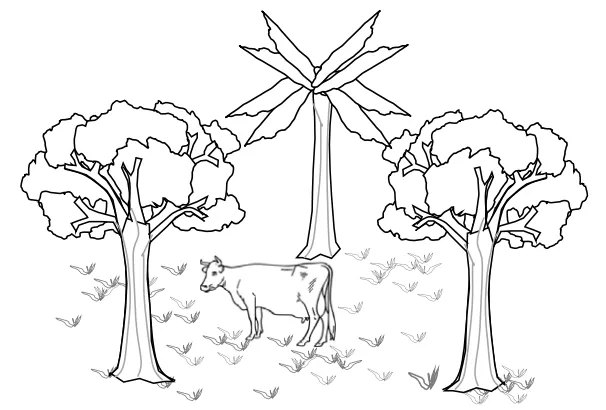
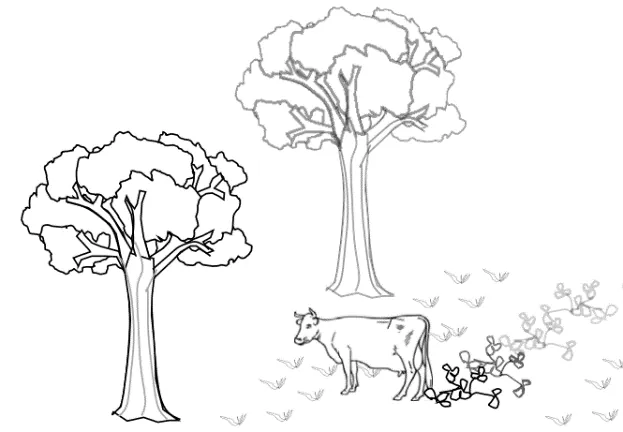
| Silvopastoral: Combining forestry and grazing of domesticated animals on pastures, rangelands or on farm. | Agrosilvopastoral: Combining trees, crops, and animals in the same area. |
 |
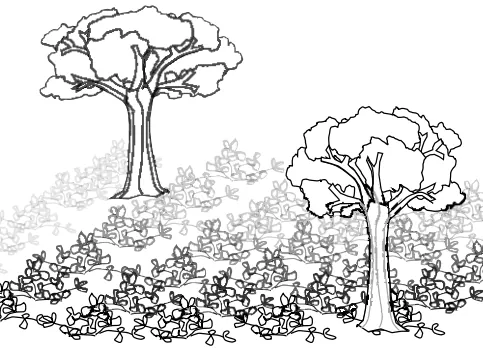 |
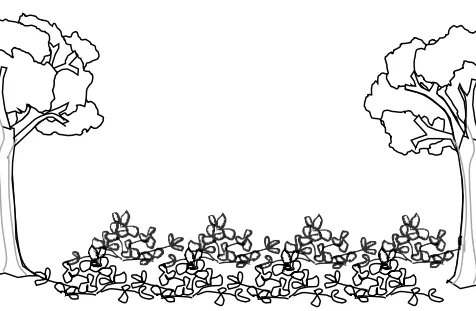
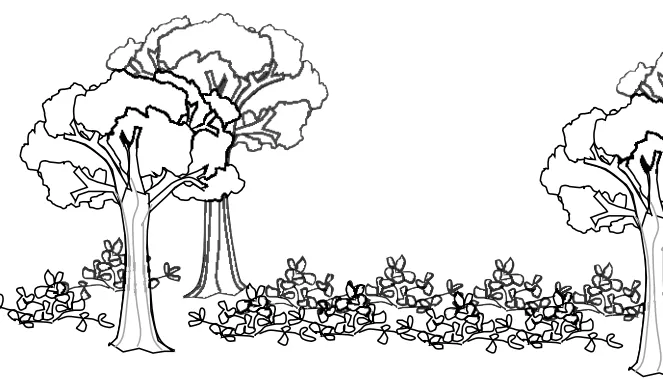
| Agrisilvicultural: Combining crops and trees in the same area: this can come under different spatial arrangements detailed below. | Random planting: Trees are randomly distributed throughout the field. |
 |
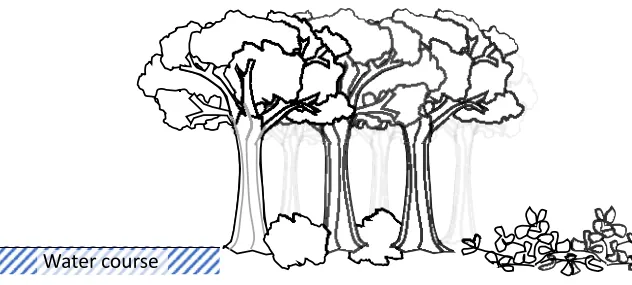 |
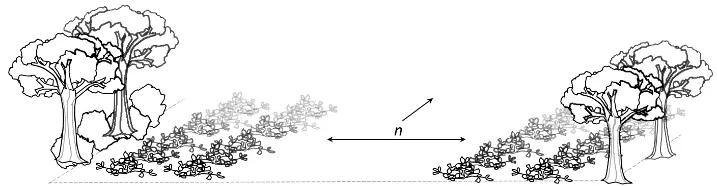
| Boundary planting: Trees are planted around the edge of the field to form a boundary. | Riparian buffer: Linear bands of permanent vegetation, such as trees, shrubs, etc., are grown adjacent to an aquatic ecosystem to maintain or improve water quality |
 |
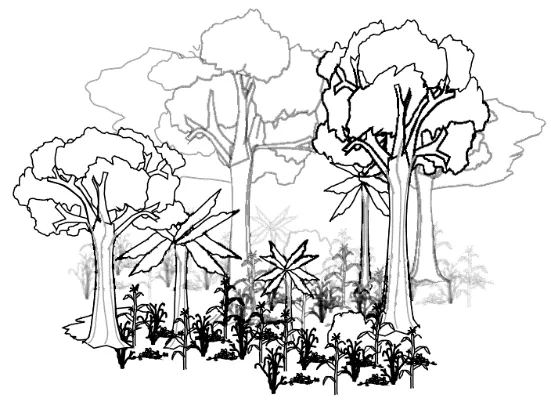 |
| Alley planting: Trees are grown in rows with wide alleys in between for crop cultivation. | Polyculture: Combining multiple trees and crops in the same space, usually with no distinct arrangement. |
Figure 3: Agroforestry methods (source [3])
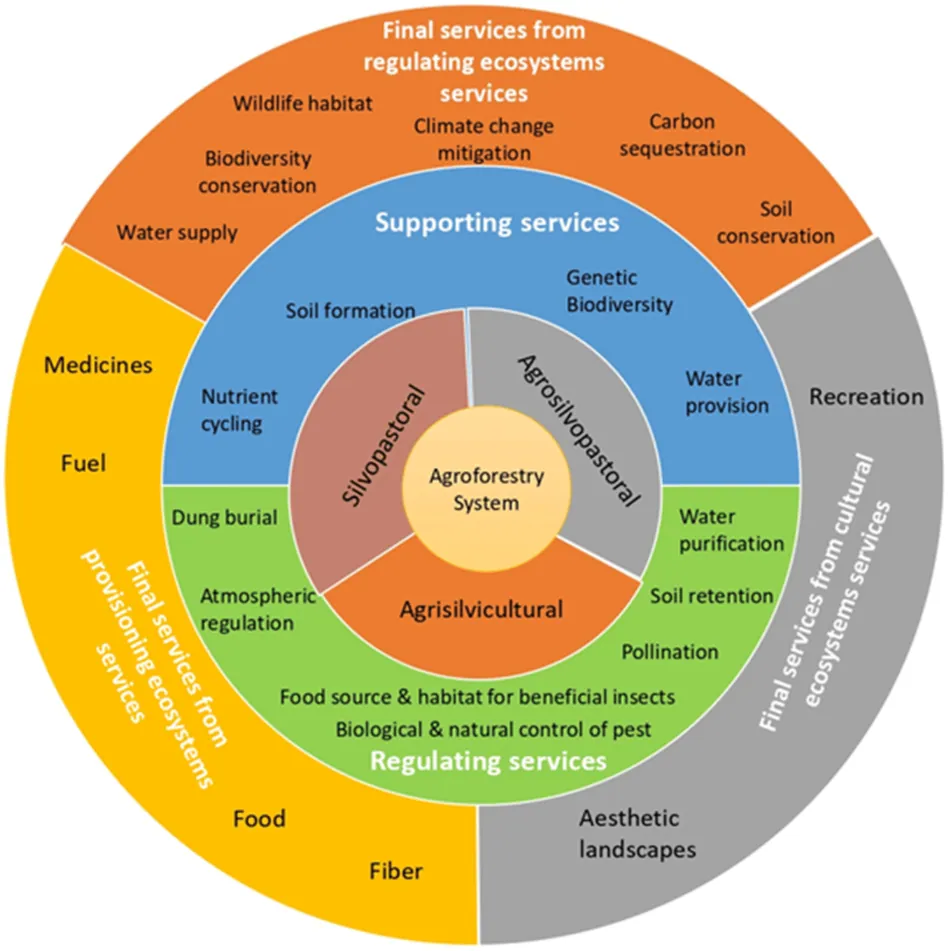
Agroforestry systems can have many benefits from the point of view of ekosystém services. Details are presented in Figure 4. Generally, the portfolio of ekosystém services is extensive, whether it is about biodiversity conservation, climate change mitigation, food or fuel supply, or recreation.
In conclusion, intercropping and agroforestry offer practical and comprehensive solutions for enhancing the climate resilience of European cropping systems. By diversifying crops, conserving biodiversity, and aiding in carbon sequestration, these sustainable practices align perfectly with the goals of climate-resilient agriculture. However, to fully realize these benefits, a concerted effort is required, encompassing policy support, technical assistance, and tailored approaches to adapt intercropping and agroforestry to the unique conditions of European agriculture.
References
Abbas, F., Hammad, H. M., Fahad, S., Cerdà, A., Rizwan, M., Farhad, W., Ehsan, E., Bakhat, H. F. (2017). Agroforestry: a sustainable environmental practice for carbon sequestration under the climate change scenarios—a review. Environmental Science and Pollution Research, 24, 11177-11191.
Ajayi, O. C. & Place, F. (2012). Policy support for large-scale adoption of agroforestry practices: experience from Africa and Asia. In Nair, P. K. R., Garrity, D. (Eds.), Agroforestry - the future of global land use. Advances in Agroforestry, vol 9. Springer, Dordrecht.
Burgess, J. A., Cano, M. E. C. & Parkes, B. (2022). The deployment of intercropping and agroforestry as adaptation to climate change. Crop and Environment, 1(2), 145–160.
den Herder, M., Moreno, G., Mosquera-Losada, R. M., Palma, J. H. N., Sidiropoulou, A., Santiago Freijanes, J. J., Crous-Duran, J., Paulo, J. A., Tomé, M., Pantera, A., Papanastasis, V. P., Mantzanas, K., Pachana, P., Papadopoulos, A., Plieninger, T. & Burgess, P. J. (2017). Current extent and stratification of agroforestry in the European Union. Agriculture, Ecosystems & Environment, 241, 121–132.
Hauggaard-Nielsen, H., Jørnsgaard, B., Kinane, J., & Jensen, E. S. (2008). Grain legume-cereal intercropping: The practical application of diversity, competition and facilitation in arable and organic cropping systems. Renewable Agriculture and Food Systems, 23(1), 3–12.
Jonsson, M., Bengtsson, J., Gamfeldt, L., Moen, J. & Snäll, T. (2019). Levels of forest ecosystem services depend on specific mixtures of commercial tree species. Nature Plants, 5(2), 141–147.
Jose, S. (2009). Agroforestry for ecosystem services and environmental benefits: an overview. Agroforestry Systems, 76(1), 1–10.
Kay, S., Rega, C., Moreno, G., den Herder, M., Palma, J. H. N., Borek, R., Crous-Duran, J., Freese, D., Giannitsopoulos, M., Graves, A., Jäger, M., Lamersdorf, N., Memedemin, D., Mosquera-Losada, R., Pantera, A., Paracchini, M. L., Paris, P., Roces-Díaz, J. V., Rolo, V., Rosati, A., Sandor, M., Smith, J., Szerencsits, E., Varga, A., Viaud, V., Wawer, R., Burgess, P. J. & Herzog, F. (2019). Agroforestry creates carbon sinks whilst enhancing the environment in agricultural landscapes in Europe, Land Use Policy, 83, 581–593.
Kiptot, E. & Franzel, S. (2012). Gender and agroforestry in Africa: a review of women’s participation. Agroforestry Systems, 84, 35–58.
Kremen, C. & Miles, A. (2012). Ecosystem services in biologically diversified versus conventional farming systems: Benefits, externalities, and trade-offs. Ecology and Society, 17(4), 40.
Kumar, B. M. & Nair, P. K. R. (2004). The enigma of tropical homegardens. In Nair, P. K. R., Rao, M. R., Buck, L. E. (Eds.), New vistas in agroforestry. Advances in Agroforestry, vol 1. Springer, Dordrecht.
Lasco, R. D., Delfino, R. J. P. & Espaldon, M. L. O. (2014). Agroforestry systems: helping smallholders adapt to climate risks while mitigating climate change. WIREs Climate Change, 5(6), 825–833.
Lithourgidis, A. S., Dordas, C. A., Damalas, C. A. & Vlachostergios, D. N. (2011). Annual intercrops: an alternative pathway for sustainable agriculture. Australian Journal of Crop Science, 5(4), 396–410.
Maitra, S., Hossain, A., Brestic, M., Skalicky, M., Ondrisik, P., Gitari, H., Brahmachari, K., Shankar, T., Bhadra, P., Palai, J. B.; Jena, J., Bhattacharya, U., Duvvada, S. K., Lalichetti, S. & Sairam, M. (2021). Intercropping—a low input agricultural strategy for food and environmental security. Agronomy, 11(2), 343.
Mobasser, H., Vazirimehr, M. & Rigi, K. (2014). Effect of intercropping on resources use, weed management and forage quality. International Journal of Plant Animal and Environmental Sciences, 4(2), 706–713.
Ofori, F. & Stern, W. R. (1987). Cereal-legume intercropping systems. Advances in Agronomy 41, 41–90.
Palacios Bucheli, V. J. & Bokelmann, W. (2017). Agroforestry systems for biodiversity and ecosystem services: the case of the Sibundoy valley in the Colombian province of Putumayo. International Journal of Biodiversity Science, Ecosystem Services and Management, 13(1), 380–397.
Pantera, A., Burgess, P. J., Mosquera Losada, R., Moreno, G., López-Díaz, M. L., Corroyer, N., McAdam, J., Rosati, A., Papadopoulos, A. M., Graves, A., Riquiero Rodríguez, A., Ferreiro-Domínguez, N., Fernándéz Lorenzo, J. L., González-Hernández, M. P., Papanastasis, V. P., Mantzanas, K., Van Lerberghe, P. & Malignier, N. (2018). Agroforestry for high value tree systems in Europe. Agroforestry Systems, 92, 944–959.
Puri, S., Nair, P. K. R. (2004). Advances in agroforestry. Agroforestry Systems, 61-62(1), 437-452.
Tilman, D., Cassman, K. G., Matson, P. A., Naylor, R. & Polasky, S. (2002). Agricultural sustainability and intensive production practices. Nature, 418(6898), 671–677.
Willey, R. W. & Rao, M. R. (1980). A competitive ratio for quantifying competition between intercrops. Experimental Agriculture, 16(2), 117–125.