
Module 3 · Chapter 1
Irrigations under climate change
Necessity and Scope
Irrigations refer to the operations and practices used to artificially supply the necessary water for the crops, especially during periods where there is not enough precipitation and soil has water deficit. These practices have been allowing people to have a food source independent of the reduced precipitations, such as during the dry season in tropical and subtropical areas. Irrigation seems like a simple procedure; however, many factors must be considered. First, the availability of water sources is crucial. Due to pollution, and non-agricultural uses, sometimes finding a good water source for irrigation is challenging [1]. About 70% of the freshwater global resources are used in irrigation [2]. Water withdrawal from freshwater sources has been intensifying due to the increase in the demand for food. Among all regions, the most irrigations correspond to the highest populated countries (China, India) and the USA.
In this framework, it is necessary to adjust all agricultural practices, including irrigation such as it is adapted to climate change and does not induce climate change.
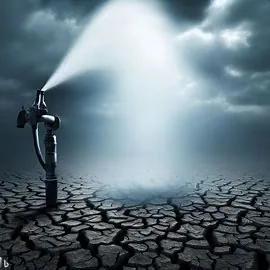
Irrigation-Induced Climate Change
To overcome the need for food, either extensification of the arable area is done, or intensification of crop production on the existing land. The latter implies modern cropping technologies that make use of irrigation and increase production at least twice according to recent reports [4,5]. On the other hand, with increasing irrigation, the depletion of freshwater resources increases, negatively influencing the biodiversity of these ecosystems.
The impact of irrigation on climate change is still not well known in all climate conditions, lacking observations in many agricultural areas. Some recent analyses of the evaporation patterns evidenced regional climate changes [6]. In agriculture, irrigations change the humidity and temperature near the surface of the soil. The impact of irrigation is scarcely studied, despite the extension of irrigation practices all over the world. The evaporation of the water in the atmosphere depends on several factors such as solar radiation, temperature, air humidity, and wind, the extra amount of water in the atmosphere impacts the climate through a change in precipitations pattern and behaviour, impacting further the availability of water resources in the ground. The heat fluxes at the soil level are strongly affected by irrigation. These changes are also believed to influence the production of convective precipitations, as it can be observed from the pattern of hail events in some areas for example, that became more extended in time and space. Overall, heat and water transfer in the atmosphere are changed in highly irrigated areas, having a powerful impact on the environment and changing the climate. Sustainable irrigation must consider all the factors starting from food security, the impact on the hydroclimate, the water quality, the impact on the soil, and used energy.
An important issue is related to the water storage. The increase in water demand leads to a higher necessity for building infrastructures able to store water, such as reservoirs, dams. The water mostly comes from rivers flow, thus, its use in agriculture might influence not just the ecosystems but the hydropower production, might increase flood risks, and implies extra operational costs thus water management is an important issue in this matter. At the same time, the lack of precipitation due to climate change affects and puts pressure on freshwater resources.
Intensification of irrigation results in increased application of pesticides and fertilizers that are leaching in the water cycle impacting the quality of the water. This influences the ecosystem and has great risks to human health affecting the quality of the water resources. Due to increased evapotranspiration, the salts concentrate at the surface of the soil, being then transported into water bodies, or just increasing the soil salinity and exposing the plants to salinity stress. Soil salinization leads to land degradation and decreased fertility which directly influences the yield since the amount of water that reaches the plants is limited by the salt accumulation in the soil. Planning the irrigation must also consider these aspects, for a better management of the water quality and a successful outcome of the irrigation of the crops.
A special case is that of the plants used as BECCS (bioenergy with carbon capture and storage). These are fast-growing species cultivated and their biomass is used to produce energy and, at the same time, is capturing a lot of carbon dioxide from the atmosphere. Overall, the growing process is assumed to have a good CO2 sequestration potential, supplying important amounts of energy. On the other hand, growing such crops in climate – change conditions requires large amounts of water, competing with other crops and inducing water stress. It is expected that biomass plantations will increase the water stress in the soil more than climate change by up to 20% up to about 90% of land areas in the future century [8], especially in highly populated areas and also in countries where large areas are cultivated with such plants. It is necessary to establish and implement water policies to limit the negative effects of intensive irrigation for biomass-producing crops.
Impact of the Climate Change on the Irrigation
Due to global warming, rainfall patterns are altered, increasing water stress over a very large area that has been rainfed. Strong heat waves are also expected due to climate change, increasing the heat stress over crops and decreasing yield. At the same time, evaporation decreases and atmospheric CO2 levels are increasing, such that in a warmer climate the crops would need more water. Thus, the highest sensitivity to climate change can be expected in the case of rainfed crops.
Studies have shown that only irrigation is not enough to mitigate climate changes. Even planned and highly controlled irrigation strategies were not able to lead to a maximum increase in yield in some areas [7]. Usually, irrigated crops give yields smaller than the potential yields because the plants are exposed to other factors, of which some are directly related to climate change (e.g., heat, drought, and salinity stresses), some resulted from poor irrigation management practices that are not considering all the factors (e.g., availability of water sources, economic limitations).
The water requirement of plants changes under climate change conditions. Firstly, some factors modify the length of the plants’ growth phases up to maturity, thus a change in the crop phenology affects the water demands and might influence the yield. This is why good management of irrigation is needed such as the needs of the crops are satisfied despite the climate conditions. We shall discuss in another chapter about best practices for irrigation management.
Sustainable Irrigation
The water used for irrigation might have different sources and different methods are applied depending on the context. Freshwater ground sources are mainly employed (e.g. rivers, lakes); in some cases, the wastewater is treated such as it could be used for irrigation, or even the sea and ocean water can be desalinated for the same purpose. The technique of irrigation depends mostly on the crop, but also on the energy requirements and other factors mostly cost-dependent. Therefore, the efficiency of the irrigation would also be different; it has been reported that the most efficient is drip irrigation, followed by sprinkler and surface irrigation.
The biggest issue in this situation is that most of the irrigation is not sustainable, meaning that water consumption strongly depletes the freshwater reserves. Among the results of unsustainable practices, we can name the negative effects on the aquatic ecosystems, and degradation of soil and flows, which are threatening water and food security. Based on these effects, new measures should be considered to limit the negative effects, thus making irrigation more sustainable. These mitigation practices include reducing the water demand by adapting the crops and creating drought-resistant plants, increasing the efficiency of water use, and keeping soil moisture by reducing evaporation and enhancing water infiltration (e.g. no-till farming technology, removing weeds, increasing the efficiency of the irrigation systems, implementing rainwater harvesting to supplement freshwater resources for irrigation, employing regenerable energy resources to operate the irrigation systems).
Two approaches are currently considered for the implementation of sustainable irrigation under climate change conditions:
soil-based solutions – these are in connection with the physical factors that determine yield and crop efficiency. These solutions are meant to:
increase the moisture of soil, by reducing evaporation and decreasing soil exposure to sunlight
improve the water retention in soil
use efficient irrigation techniques to keep mild water stress conditions for the plants and use alternative green energy sources to operate the irrigation systems as well as adopt techniques focused on the harvesting of rainwater
use technologies that improve the retention of water in soils
crop-based solutions – which are meant to:
increase the resistance of plants to drought stress
improve the water productivity of crops
use crops that behave better under water stress
The expansion of irrigation could negatively impact many levels, influencing food security, the environment (hydroclimatic feedback, water resources and quality, energy used, etc.), soil salinization, and so on.
Another sustainable option for protected cultivation is represented by greenhouses that are managed by automatic systems that control water use and increase its application efficiency for maximum productivity.
Conclusions
Many areas have been affected as a result of irrigation which led to a change in the precipitation and temperature pattern due to the increase in water evaporation. More water at the soil level increases the evapotranspiration rate changing the energy balance at that level, resulting in changing the temperature gradients, and thus, the heat transfer in the atmosphere. Despite reducing the effects of high temperatures, the moisture resulting from irrigation produces a warmer climate due to the increased air humidity. This represents the hydroclimatic feedback of irrigation. Intensive irrigation might also induce increased salinity in the soil due to an increased evaporation rate, soil salinity having mostly a negative impact on the crops.
For sustainable irrigation systems, it is necessary to consider all the above-mentioned aspects related to external factors. Planning irrigation systems for different crops usually takes into consideration the type of crop and climate factors. However, in the frame of climate change, more aspects need to be considered to achieve sustainable irrigation practices, such as:
Choose to grow plants suitable for the respective area considering the climate conditions and water resources for irrigation
More attention should be paid to the hydroclimatic feedback and changing heat transfer patterns in the irrigated areas
Consider the effect of other abiotic factors, such as heat stress and salinity stress and, if possible, use crops that have a positive response to this abiotic stress; crop rotation and diversification can also be mitigation measures
Envision water storage infrastructures suitable for the respective area where irrigation is used such as to have a minimum impact on the ecosystem and other activities that make use of those water resources
A better control of the application of different chemicals (e.g. pesticides, fertilizers) since these are expected to be found in soil and water in the irrigated area and not only
From the economic point of view an estimation should be made to evaluate irrigation as cost-efficient practices
The implementation of measures to mitigate the negative effects of climate change through irrigation must consider the combination of the above-mentioned factors, rather than individual actions.
References
Cai, X. Risk in Irrigation Water Supply and the Effects on Food Production, Journal of the American Water Resources Association (JAWRA), 2005, 41(3), 679-692, https://doi.org/10.1111/j.1752-1688.2005.tb03763.x
Corinsh, G.A., Kielen, N.C. Wastewater irrigation – hazard or lifeline? Empirical results from Nairobi, Kenya and Kumasi, Ghana, in Wastewater use in irrigated agriculture: confronting the livelihood and environmental realities, 2004, pp.69-79, https://doi.org/10.1079/9780851998237.0069
Rosa, L. Adapting agriculture to climate change via sustainable irrigation: biophysical potentials and feedbacks. Environmental Research Letters, 2022, 17(6), 063008, https://orcid.org/0000-0002-1280-9945
Nocco, M.A.; Smail, R.A.; Kucharik, C.J. Observation of irrigation-induced climate change in the Midwest United States, Global Change Biology, 2019, 25(10), 1-13, https://doi.org/10.1111/gcb.14725
World Bank 2022 Water in agriculture available at: www.worldbank.org/en/topic/water-in-agriculture#1(Accessed March 2022)
Nocco, M.A.; Smail, R.A.; Kucharik, C.J. Observation of irrigation-induced climate change in the Midwest United States, Global Change Biology, 2019, 25(10), 3472-3484, https://doi.org/10.1111/gcb.14725
Kaini, S.; Harrison, M.T.; Gardner, T.; Nepal, S.; Sharma, A.K. The impact of climate change on the irrigation water demand, grain yield of wheat crop in Nepal, Water, 2022, 14, 2728, https://doi.org/10.3390/w14172728
Stenzel, F.; Greve, P.; Lucht, W.; Tramberend, S.; Wada, Y.; Gerten, D. Irrigation of biomass plantations may globally increase water stress more than climate change, Nature communications, 2021, 12, 1512, https://doi.org/10.1038/s41467-021-21640-3
Nikolaou, G.; Neocleous, D.; Christou, A.; Kitta, E.; Katsoulas, N. Implementing sustainable irrigation in water-scarce regions under the impact of climate change, Agronomy, 2020, 10(8), 1120, https://doi.org/10.3390/agronomy10081120