
Module 3 · Chapter 2
Crop irrigation requirements
Necessity and scope
Less than 65% of the water used for irrigation is actually used by plants. Moreover, different crops have different water requirements, depending on their development stages and some other parameters. In this lecture, we discuss about determining the needs for water of different crops, such as adopting sustainable irrigation practices and using suitable technologies [1].
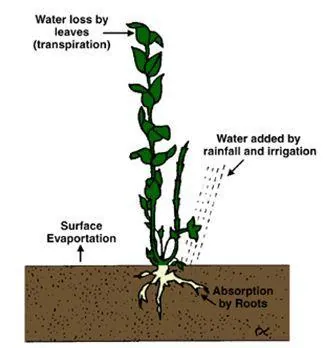
The crop water needs
The water needs of a crop represent the amount of water necessary for the plants to overcome the water loss due to evapotranspiration, such as the crop has optimum conditions for growth and the production reaches the maximum under the existing environment [1]. The parameters that determine the water needs of a crop are:
the climate (which directly influences the evapotranspiration process);
the type of the crop (different species need different amounts of water for their development);
the phenophase when irrigations are applied (during the last stages of development, the plants might require more water than during the first development stages).
1. Influence of the climate on the water needs of the crops
The water necessary of a crop is strongly determined by the environmental conditions: temperature, humidity, sunshine, precipitation, and wind. In humid climates, there is enough precipitation to satisfy the needs of the plants for water; here the issue lies with too much water existing on the field, a problem that can be solved with drainage systems. In sub-humid and semi-arid climates, there are still important precipitations but they are not always covering for the plants needs, especially during the dry season when irrigations are mandatory. In semi-arid, arid, and dessert climates, growing any crop without irrigation is impossible. The irrigation water demands are defined by FAO-56 [1].
In hot, dry, and windy areas, the crops needs for water are the highest, while the lowest are in cool, cloudy, and high humidity, with fewer wind zones. These factors are incorporated in a parameter called reference crop evapotranspiration (ETo), expressed in millilitres per time unit (e.g. day, month, season) [1,2]. The reference crop is grass, and thus, the reference crop evapotranspiration represents “the rate of evapotranspiration from a large area, covered by green grass, 8 to 15 cm tall, which grows actively, completely shades the ground and which is not short of water”[1].
The reference crop evapotranspiration rate can be determined experimentally (using an evaporation pan), or it can be theoretically calculated, based on climatic data (e.g. Blaney-Criddle method). Experimentally, several evaporation pans are used, such as Class A or Sunken Colorado pans. The pan is installed in the field and a known quantity of water is placed in the pan (the pan surface and water depth are known or measured); the water evaporates during a time interval (e.g. 24h), and the remaining quantity is measured at the end of the time interval (including the eventual precipitations). The evaporation in the pan has to be multiplied by a pan coefficient to determine the reference crop evapotranspiration, as follows:
ETo = Kpan × Epan
where ETo is the reference crop evapotranspiration, Epan is the pan evaporation, and Kpan is the pan coefficient [1]. In case the level of water drops very much, then water is added by measuring its depth before and after the addition; the same is in the case of precipitations. The pan coefficient depends on the type of pan, location, and climate, the values varying between 0.35 and 0.85 for the Class A evaporation pan, and 0.45 and 1.10 for the Sunken Colorado pan.
A theoretical method can also be used to determine the reference crop evapotranspiration rate, namely the Blaney-Criddle method. It is based on the mean daily temperature:
ETo = p(0.46•Tmean+8)
where p is the mean daily percentage of annual daytime hours and Tmean is the mean daily temperature. The mean temperature is evaluated as the average between the minimum and maximum average temperatures during the month. The mean daily percentage of annual daytime hours can be found depending on the approximate latitude of the area. The accuracy of this method is low, in extreme climatic conditions being just a rough estimation of the order of magnitude. Depending on the climate and mean daily temperature, the value of the reference crop evapotranspiration rate changes as it is shown in Table 1 [1].
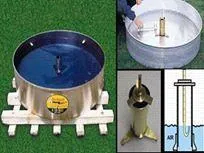
Table 1. Estimated values for the reference crop evapotranspiration rate.
| Mean daily temperature | |||
|---|---|---|---|
| Climatic zone | Low (<15°C) | Medium (15-25°C) | High (>25°C) |
| Arid | 4-6 | 7-8 | 9-10 |
| Semi-arid | 4-5 | 6-7 | 8-9 |
| Moist | 3-4 | 5-6 | 7-8 |
| Humid | 1-2 | 3-4 | 5-6 |
2. The influence of the type of crop can be introduced in the formula by the crop factor, Kc, to determine the evapotranspiration rate of a specific crop. The formula is as follows:
ETcrop = ETo × Kc
The crop evaporation rate is measured in the same units as the reference evapotranspiration rate. The crop factor depends also on some factors: the type of crop (e.g. some plants have larger leaves, thus the evapotranspiration rate is increased and the crop factor is higher than the unit because this specific crop uses more water than the reference grass; for other species that use less water, the crop factor is smaller than the unit), the phenophase (e.g the crops usually use more water when fully developed compared to those in the first phenophases), and the climate (e.g. the climate determines the phenophases and, thus, growing period, such as in colder climates the plants grow slower than in warmer ones). The crop factor depends on specific parameters such as the duration of growing season, and the also the duration of some important phenophases. The first one can be determined by knowing the species, climate conditions, and planting date. Just for example, carrots have 100-150 days growing period, maize 120-180 days, green onions 70-95 days, and rice 90-150 days [3-8].
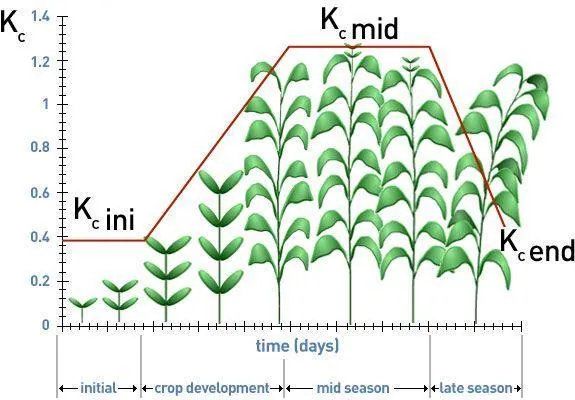
In the frame of the above-discussed information, the growing period is divided into 4 stages:
-stage 1 – the initial stage – from sowing or transplanting of the crop until it covers 10% of the ground
-stage 2 – crop development stage – from the end of the initial stage until the crop will totally cover the ground
-stage 3 – mid-season stage – from the end of the crop development stage until the plant reaches maturity
-stage 4 – late season stage – from the end of the mid-season stage until the crop is harvested.
Because the crop factor changes each month, thus the crop evapotranspiration rate changes in time, making it necessary to calculate it monthly. There are also some special cases. For example, alfalfa and clover are regularly cut, thus after cutting they will be again in the initial stage. One way to overcome such situations is to consider the average values for the crop factor. Rough estimations are done for different types of crops to determine the crop water need and sensitivity to drought [3-8].
Irrigation water needs of crops
Usually, the water necessary for the crops is provided by rainfall. When this water is not available due to a lack of precipitation, the irrigation water need (IN) equals the crop water need. When there is still some precipitation, then the irrigation water need would be the difference between the crop water need (ETcrop) and the water from precipitation effectively used by the plants, named effective rainfall, (Pe), thus:
IN = ETcrop − Pe
The effective rainfall can be determined from the difference between the total quantity of precipitation, and the evaporation, runoff, and percolation amounts, representing the quantity of water that remains near the roots of the plants.
As a result of the above-discussed estimations, in order to determine the irrigation water needs of some specific crop, all the discussed factors should be first evaluated, as previously discussed, and finally, the irrigation water need of the respective crop can be determined. This is called the FAO56 method and uses a very simple approach to determine the evapotranspiration of a crop. The standard crop factors are tabulated. However, they refer to standard climates and need to be adjusted to local climates. In such conditions, the standard potential ETc is replaced by the actual crop evapotranspiration, ETact, and the standard Kc is replaced by actual crop factor Kc act which is the product between the crop factor, Kc, and a stress coefficient, Ks, which corresponds to the water or salinity stress and can be extended to other types of stress as well.
Crop water requirements (CWR) represent the amount of water that a crop needs to achieve its potential production under some known environmental conditions. The net irrigation requirements (NIR) represent the quantity of water that needs to be applied to satisfy its water requirements and is calculated by subtracting the precipitations, capillary rise, and soil water storage variation from the CWR, and adding the deep percolation from the soil root zone (DP) and the runoff (RO). In this way, the gross irrigation requirements can also be defined as follows [3]:
$GIR = \frac{NIR + LR}{BWUF}$
where BWUF is the beneficial water use fraction, also called application efficiency, or combined conveyance, distribution, and application efficiency when the operational losses in canals are considered.
Crop water stress detection
Plant water stress can be detected as a decreased soil water content or a physiological response of the plants to water deficit [8-14]. A rough estimation of the crop water necessities is not enough for sustainable and efficient irrigation. There are several methods used to quantify the crop water stress in order to implement optimum irrigation scheduling.
1. Soil water measurements include:
-the gravimetric method (the soil is dried and weighed before and after to estimate the amount of water);
-soil moisture sensors (neutron probe, TDR, and FRD based on the difference of the dielectric constant of water and soil)
-tensiometers (measure the water potential)
2. Soil water balance approach (the soil moisture is determined through calculations)
3. Plant-based approaches
-stomatal conductance
-leaf water potential
-relative water content
-sap flow measurements
-stem and fruit diameter
4. Remote sensing
-infrared thermometry (the canopy temperature increases as a result of water stress)
-spectral vegetation indices: structural indices (the reflectance indices in VIS and NIR spectral range are measured), xathophyll indices (measures the photochemical reflectance index linked to the xanthophyll cycle), water indices (measures the reflectance in NIR region to determine the canopy moisture content) [5]
Conventional methods used to monitor water stress are based on moisture measurements and meteorological data. The soil near the roots is sampled and the water depletion is estimated. The method is not very accurate because it assumes a uniform plant density, the same transpiration rate for all the plants. The evapotranspiration methods described above are time-consuming giving sometimes unreliable information. Other methods use stomatal conductance and leaf water potential to give an image of the plant water status.
Remote sensing is a newly proposed method to detect water stress in plants through spectral reflectance indices. Such a technique is more related to irrigation scheduling and we shall detail it in another lecture. These technologies have been proposed for many years, but with the latest development in high-resolution thermal cameras, they have become more popular [5]. Some recent papers also suggested the integration of remote sensing data with soil water balance to optimize water management in irrigation. The spectral properties of the leaves do not depend only on the water status; the soil background, canopy structure, leaf thickness and age, and some other similar factors can influence the spectral response related to plant water status. Currently, there is undergoing research to increase the precision of such methods since remote sensing allows real-time monitoring of water stress in plants, can cover large areas, and allows fast processing of the information, thus, offering the possibility to take action fast [12-14].
References
Allen, R.G., Pereira, L.S., Raes, D., Smith, M. Crop evapotranspiration - Guidelines for computing crop water requirements-FAO Irrigation and drainage paper 56, FAO – Food and Agriculture Organization of the United Nations, Rome, 1998.
Ihuoma, S.O., Madramootoo, C.A. Recent advances in crop water stress detection, Computers and Electronics in Agriculture, 2017, 141, 267-275, https://doi.org/10.1016/j.compag.2017.07.026.
Pereira, L.S., Paredes, P., Jovanovic, N. Soil water balance models for determining crop water and irrigation requirements and irrigation scheduling focusing on the FAO65 method and the dual Kc approach, Agricultural Water Management, 2020, 241, 106357, https://doi.org/10.1016/j.agwat.2020.106357.
Virnodkar, S.S., Pachghare, V.K., Patil, V.C., Jha, S.K. Remote sensing and machine learning for crop water stress determination in various crops: a critical review, Precision Agriculture, 2020, 21, 1121-1155, https://doi.org/10.1007/s11119-020-09711-9.
Gerhards, M.; Schlerf, M.; Mallick, K.; Udelhoven, T. Challenges and Future Perspectives of Multi-/Hyperspectral Thermal Infrared Remote Sensing for Crop Water-Stress Detection: A Review. Remote Sens. 2019, 11, 1240. https://doi.org/10.3390/rs11101240/
Danielescu, S.; MacQuarrie, K.T.B.; Zebarth, B.; Nyiraneza, J.; Grimmett, M.; Levesque, M. Crop Water Deficit and Supplemental Irrigation Requirements for Potato Production in a Temperate Humid Region (Prince Edward Island, Canada). Water 2022, 14, 2748. https://doi.org/10.3390/w14172748.
Pereira, L.S. ed., Editorial – Updated and advances to the FAO56 crop water requirements method, Agricultural Water Management, 2021, 248, 106697, https://doi.org/10.1016/j.agwat.2020.106697.
Alghory, A., Yazar, A. Evaluation of crop water stress index and leaf water potential for deficit irrigation management of sprinkler-irrigation wheat, Irrigation Science, 2019, 37, 61-77, https://doi.org/10.1007/s00271-018-0603-y.
Jackson, R.D., Kustas, W.P., Choudhury, B.J. A reexamination of the crop water stress index, Irrigation Science, 1988, 9, 309-317, https://doi.org/10.1007/BF00296705.
Wanjura, D.F., Hatfield, J.L., Upchirch, D.R. Crop water stress index relationships with crop productivity, Irrigation Science, 1990, 11, 93-99, https://doi.org/10.1007/BF00188445.
D’Odorico, P., Chiarelli, D.D., Rosa, L., Rulli, M.C., The global value of water in agriculture, PNAS, 2020, 117(36), 21985-21993, https://doi.org/10.1073/pnas.2005835117.
Minhas, P.S., Ramos, T.B., Ben-Gal, A., Pereira, L.S. Croping with salinity in irrigated agriculture: Crop evapotranspiration and water management issues, Agricultural Water Management, 2020, 227, 105832, https://doi.org/10.1016/j.agwat.2019.105832.
Current perspective to predict actual evapotranspiration D. Bucur Ed., IntechOpen, Croatia, 2017, https://doi.org/10.5772/65621.
Advanced Evapotranspiration Methods and Applications, D. Bucur Ed., IntechOpen, London, UK, 2019, https://doi.org/10.5772/intechopen.73720.