
Module 6 · Chapter 6
Renewable energy applications in agriculture – 1
Human food is only produced through agriculture. The focus of sustainable agriculture is on the need to employ tools and techniques that increase food production without compromising environmental resources or ecosystem services [1].
The energy requirements for heating, cooling, traction, and other farm energy functions can be met with a variety of technologies. Rural areas can produce renewable energy using geothermal, bioenergy, solar, wind, and solar energy sources. Farmers can use a variety of technologies simultaneously. In other circumstances, the farm's renewable energy production can be injected into the gas or electricity grids. Both at the farm level and across the entire agricultural sector, there are a wide range of options and potential for the production and distribution of renewable energy [2].
Most agricultural equipment is run by fossil fuels, which produce greenhouse gases and hasten climate change by releasing them into the atmosphere. By promoting the use of renewable energy sources like solar, wind, bioenergy, hydropower, and geothermal energy, such environmental sustainability issues can be reduced [3, 4]. New opportunities for cooperation in the production, sale, and distribution of renewable energy are presented by numerous small- and medium-sized installations. They replace fossil fuels, promote economic growth in rural areas, and contribute to energy security [2].
Renewable Energy For Agriculture
Energy provision to agricultural systems has always been a crucial aspect of agricultural development and is crucial to guaranteeing food security. For many tasks in agriculture, including seeding, irrigation, harvesting, and soil preparation, electrical and mechanical power is necessary. Furthermore, reliable and regular energy sources are required for the pumping and distribution of water via irrigation systems [4, 5].
Agriculture technology is rapidly changing and developing. These advancements improve farm machinery and equipment, farm facilities, and farm buildings for crops and animals on farms [6] New and modern agricultural technology applications increase energy consumption even more. Alternatives to fossil fuel energy sources are required as agricultural production modernizes to ensure that food systems are constructed on safe, environmentally sustainable, and resilient foundations. Replacing fossil fuels in agriculture with low-carbon and clean energy solutions is crucial to addressing the energy needs of food systems in both developed and developing countries [7, 8].
Energy costs are one of the most important factors influencing the prices of agricultural products [9]. Increasing energy costs raise fuel and electricity prices directly, as well as feed, fertilizer, and transportation costs indirectly. Energy-saving practices and the use of renewable energy are critical for lowering agricultural production costs and ensuring local production continuity [10]. Farmers can produce their own energy and become more self-sufficient by using renewable energy [11].
Although the use of renewable energy technologies in agriculture dates from ancient times, widespread adoption with technological infrastructure has only occurred in the last century. Renewable energy is used in agriculture not only for electricity generation, but also in many other areas, both directly and indirectly [3, 10]. The table below contains data on the use of renewable energy sources in agriculture, and the sections that follow provide a detailed description of the agricultural application of renewable energy technologies.
Table 1. Use of Renewable Energy Sources in Agriculture [12]
| Power supply | Application Type | Application area | Requirements | Advantages |
|---|---|---|---|---|
| Solar energy | Lighting | Natural lighting | Natural agricultural structures should be designed in accordance with lighting. | Lighting costs are reduced. Production increase is provided. It requires little maintenance. |
| Photovoltaic | Electricity generation | Solar radiation should not be obstructed. | Electricity requirement is met. It can be placed in the building design or on the roof. |
|
| Ambient Heating | Heating | Underfloor heating is required. Walls need sun exposure. |
Living conditions improve. Air quality improves. |
|
| Water Heating | Hot water | Solar radiation should not be obstructed. | Hot water requirement is met. | |
| Geothermal energy | Heat pump | Greenhouse heating Ambient heating Product drying |
Space for horizontal or vertical wells is necessary. Chemical of geothermal fluid is important. |
Heating and cooling with heat exchangers Practices improve living conditions. |
| Biomass Energy | Biofuel | Electricity generation Ambient heating and cooling Water heating Fuel |
Organic material must be continuously supplied from agricultural and forestry waste. | Waste control is provided. Operating costs are reduced. Backup power is provided. |
| Wind power | Turbine | Electricity generation Mechanical strength |
Wind blowing at a certain speed is required. | With the developing technology, energy unit costs are decreasing. |
| Hydropower | Hydroelectric | Electricity generation | Reliable water flow is required. | The investment made can be used not only for energy but also for irrigation and flood purposes. |
Use of Solar Energy in Agriculture
Solar energy accounts for the majority of the world's energy resources. Only a small amount of the sun's energy reaches the Earth's surface. However, the modest amount of solar energy that reaches the Earth's surface in a single hour exceeds the total amount of energy produced by all other accessible sources, including hydroelectric, nuclear, and fossil fuels [6].
Solar energy has recently emerged as a viable option for both large and small-scale farms. It's a versatile and environmentally beneficial alternative energy source, especially in remote locations where diesel fuel is expensive or there's no reliable access to the power grid [5].
Solar energy technologies generate either electrical or thermal energy. Photovoltaic panels, which are typically made up of solar cells composed of layers of silicon that produce direct current electricity, can convert solar radiation into electricity. When necessary, inverters can convert this to alternating current for use by commercial electrical appliances, which are typically powered by grid electricity [13]. Solar panel technology, which is used to generate electricity from solar energy, is relatively new. Despite this, it is the world's fastest growing sector. People who live in remote areas or who require grid independence are particularly interested in these installations. When it is dark, the electricity produced by utilizing daylight for the use of electricity required in a home is also used through batteries with storage units. With daily increases in grid electricity prices and price decreases due to technological advancement in photovoltaic systems, generating electricity from the sun is becoming increasingly appealing. Photovoltaic panels are cost-effective for supplying electricity in remote locations such as farms, orchards, and other agricultural activitiesIn applications such as electric fence, field or house lighting, and water pumps for animal watering or agricultural irrigation, photovoltaic systems can be significantly less expensive to install than power lines [3]. Figure 1 shows the applications of solar panels for agricultural use.
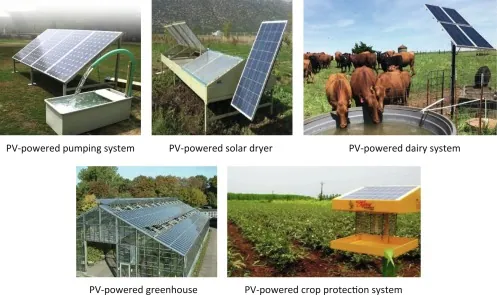
Cold storages are special isolated rooms with no outside air exchange that are built to extend the shelf life of food, reduce losses, and prolong storage life in order to maintain product quality. Energy consumption in cold stores is high, and this energy can be provided by installing photovoltaic panels on the cold store's roof. Solar energy is one of the best solutions for running small cold stores in rural areas. The solar energy source can also help to reduce the operating costs of the cold storage system [14, 15].
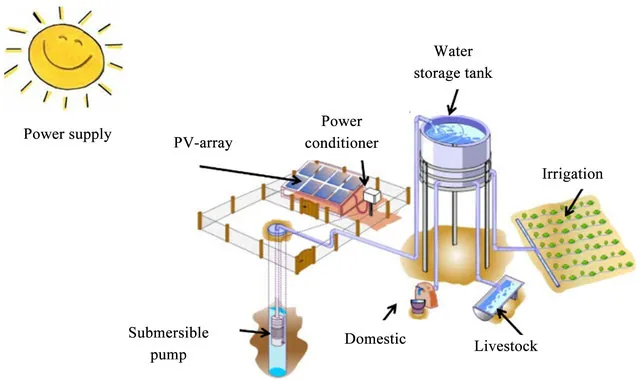
The most prominent recent application of solar panels is in irrigation systems. Pumping systems are needed for irrigation. This is achieved through the use of electric pumping systems. As presented imn Figure 2, pumping systems powered by photovoltaic panels meet a wide range of water needs, from crop irrigation to animal watering and domestic use [3]. Solar panels, transmission pipes, and batteries are all that is required to use solar energy in irrigation. Producers of agricultural irrigation aim to irrigate large areas by transmitting water under pressure. Drip irrigation, micro irrigation, sprinkler irrigation, and surface irrigation can all benefit from solar energy. Irrigation is accomplished by transferring the energy collected in the solar panel to other parts via a battery [10]. Solar-powered irrigation technology is gaining popularity around the world, and countries are developing policies to promote renewable energy solutions, including solar energy. Solar irrigation provides a solution to the frequent energy shortages that disrupt the supply needed to extract and distribute irrigation water in the agricultural sector [5]. Many of these systems also have the added advantage of storing water for usage when the sun isn't shining, which reduces expenses overall, increases simplicity, eliminates the need for batteries, and increases system efficiency [3].
Another use for photovoltaic panels is to power electric fans for air circulation. Modern animal farms can increase production by doubling or tripling it by housing their animals in enclosed structures. Photovoltaic systems can provide electricity for the fans used to circulate air in these systems [3].
Solar collectors are a different type of solar energy application. These systems funnel heat to a central location. In many parts of the world, cooking stoves powered by heat generated are used [17]. Systems that run at a specific temperature make up greenhouse systems. Therefore, controlling temperature is the most crucial factor to take into account. It is one of the regions where solar energy systems are used. When it comes to regularly regulating the temperature, two approaches stand out. The initial technique makes use of solar collectors. Solar energy generation is an additional strategy. The solar energy system first generates electricity, which is then used to heat the water, heating the greenhouse in the process. In these systems, solar panels, batteries, and inverters are employed [18, 19].
Solar energy is not only used to generate electricity in the agricultural sector. The second most common use of solar energy is to generate heat for various agricultural processes [13]. Solar heat applications include drying systems. There are various types of solar dryers available for drying agricultural products. Active dryers and passive dryers can be used depending on the heating scheme. External means for solar heat transfer, such as pumps and fans, are used in active solar dryers to transfer solar energy from the solar collector to the product drying beds, whereas heat is circulated naturally in passive dryers by wind pressure, buoyancy, or a combination of them [20].
Solar hot water systems have long been available. These systems feature a collector constructed of materials that absorb heat from the sun efficiently. Cold water is sent through the collector, where it is heated and returned to the tank. Cooler water is collected from the tank's bottom and returned to the solar collector as hot water climbs to the tank's top. Solar hot water can help reduce the amount of energy consumed to heat water in houses [8].
Use of Geotermal Energy in Agriculture
Geothermal energy is the heat energy that is carried to the surface by hot water, steam, and gases that may contain more dissolved minerals, different salts, and gases than the nearby groundwater and surface water and that are above the regional atmospheric average temperature. Geothermal energy is created by heat and pressure that has built up at various depths of the earth's crust. The majority of the time, this energy comes from either wells specifically drilled for this purpose or from water that rises to the surface through weak zones created by cracks and fractures that extend from the subsurface to the earth's surface [21].
Geothermal energy is frequently employed in agriculture to produce electricity, but it is also a significant source for heating greenhouses, fish ponds, crops, and grains that need to be dried. While many of the frequent uses of geothermal energy are comparable to those of other renewable energy sources, geothermal energy is more reliable and accessible since it is constantly present. Geothermal energy offers the economic and technological potential to enable the development of numerous agricultural products with added value in the future [22, 23]. An example of cascading use of geothermal power plants on a farm is shown in Figure 3.
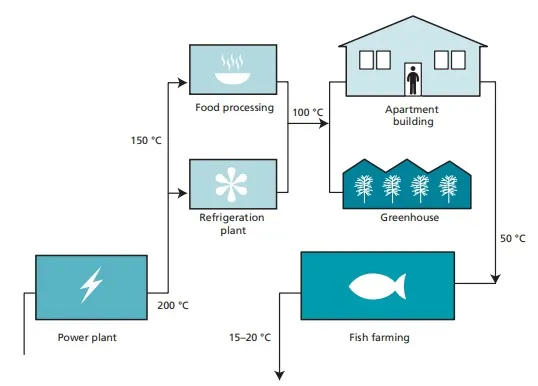
Geothermal energy is the most commonly used agricultural application worldwide, particularly for greenhouse heating. In terms of operation and maintenance, the geothermal energy source is best suited for greenhouse heating applications due to its low depth and low temperature. This lowers the cost of excavation and fluid pumping [24]. Greenhouse heating systems powered by geothermal energy are assessed alongside the equipment used to transport the geothermal fluid from the extraction area to the area of use. The technical terms for these systems include combination heating systems, air heating systems using fans and heat exchangers, and heating systems located in the soil, on the soil surface, or on growing tables. The ground or subsoil heating system is the most popular heating system in geothermal energy applications. The best solution is to support this system with an ambient air heating system fed from the same source. The ground heating system is made up of heating pipes that are buried at various depths and intervals and through which hot fluid circulates. Plastic heating pipes are now widely used [25]. Using geothermal resources instead of conventional energy saves about 80% on fuel costs and 5-8% on total operating costs. Other benefits of geothermal heating for greenhouses include cleaner air and water, improved hygiene, a stable workforce, and the ability to take advantage of tax breaks [23].
Ponds and fisheries also use geothermal energy. The amount of heating needed for these facilities is substantial. In this use, geothermal energy is frequently utilized to warm water in tanks, pools, and canals. To obtain the temperatures needed for fish farming, geothermal hot water is utilized to heat fresh water in heat exchangers or combined with fresh water. Such use of geothermal resources is suggested as a remedy for aquaculture in colder areas or in situations where conventional heating may not be economical [26, 27].
Around the world, geothermal heat is utilized to dry a wide variety of agricultural products. Geothermal energy is used to dry products in clean and sanitary settings. The temperature of the geothermal energy before drying and the temperature values necessary for the drying application are important criteria. Heat for drying can be obtained from geothermal wells in the form of hot water or steam, or from a geothermal plant's waste heat [23].
Reference
1. UNDP, Sustainable Agriculture, in The International Guidebook of Environmental Finance Tools, United Nations Development Programme (UNDP). 2012, United Nations
2. EIP-AGRI, Agricultural European Innovation Partnership (EIP-AGRI) Focus Group Enhancing production and use of renewable energy on the farm. 2019: Belgium.
3. Chel, K., Renewable energy for sustainable agriculture. Agronomy for Sustainable Development, Springer Verlag/EDP Sciences/INRA, 10.1051/agro/2010029 . hal00930477, 2011. 31(1): p. 91-118.
4. Atılgan Türkmen, B., Renewable Energy Applications for Sustainable Agricultural Systems. International Journal of Innovative Approaches in Agricultural Research, 2020. 4(4): p. 497-504.
5. Hans Hartung, L.P., The benefits and risks of solar-powered irrigation - a global overview, Food and Agriculture Organization of the United Nations and Deutsche Gesellschaft für Internationale Zusammenarbeit. 2018.
6. Ghulam Hasnain, T., A. Muhammad, and H. Umar Sohaib, Solar Technology in Agriculture, in Technology in Agriculture, A. Fiaz and S. Muhammad, Editors. 2021, IntechOpen: Rijeka. p. Ch. 20.
7. IRENA and FAO, Renewable energy for agri-food systems – Towards the Sustainable Development Goals and the Paris agreement. https://doi.org/10.4060/cb7433en. 2021: Abu Dhabi and Rome.
8. Flores G, E.D.N., Hoffmann D,, Renewable energy in agriculture: A farmer’s guide to technology and feasibility NSW Farmers, First edition. 2015.
9. FAO, Handbook on Agricultural Cost of Production Statistics Guidelines for Data Collection, Compilation and Dissemination, Food and Agriculture Organization of the United Nations. 2016.
10. AgroWell. Use of Renewable Energy Resources in Agriculture. 2022 30.03.2023]; Available from: https://agrowell.com.tr/use-of-renewable-energy-resources-in-agriculture/.
11. Stephen Herbert, M.H., Carrie Chickering-Sears, Sarah Weis, Jacqui Carlevale, Katie Campbell-Nelson, Renewable Energy Production on Farms. Center for Agriculture, Food, and the Environment, UMass Extension Crops, Dairy, Livestock and Equine Program, 2016.
12. Öztürk, H.H. Tarımda yenilenebilir enerji kaynaklarının kullanımı. 2006 20.03.2023]; Available from: http://www.emo.org.tr/ekler/85e48a43c7f63ac_ek.pdf.
13. R. Sims, A.F., M. Puri, S. Bracco, Opportunities for Agri-Food Chains to Become Energy-Smart, Food and Agriculture Organization of the United Nations (FAO), PAEGC Founding Partners. 2015.
14. Mandal, D. and S. Mondal, Solar PV powered on-farm cold storage design software HimSaurya for improving storage quality and reducing wastage of perishable agricultural produce. International Journal of Applied Sciences and Engineering Research, 2017. 6: p. 11-23.
15. Atılgan Türkmen, B., Renewable Energy Applications for Sustainable Agricultural Systems. International Journal of Innovative Approaches in Agricultural Research, 2020. 4(4): p. 497 - 504.
16. Chilundo, R., U. Mahanjane, and D. Neves, Design and Performance of Photovoltaic Water Pumping Systems: Comprehensive Review towards a Renewable Strategy for Mozambique. Journal of Power and Energy Engineering, 2018. 06: p. 32-63.
17. Troya, Tarımsal Üretimde Yenilenebilir Enerji Kullanımı. Troya Çevre Derneği, 2015.
18. Wang, T., et al., Integration of solar technology to modern greenhouse in China: Current status, challenges and prospect. Renewable Sustainable Energy Reviews, 2017. 70: p. 1178-1188.
19. Gorjian, S., et al., A review on opportunities for implementation of solar energy technologies in agricultural greenhouses. Journal of Cleaner Production, 2021. 285: p. 124807.
20. Gorjian, S., et al., The advent of modern solar-powered electric agricultural machinery: A solution for sustainable farm operations. Journal of Cleaner Production, 2021. 292: p. 126030.
21. EİGM. Jeotermal Enerji, Enerji İşleri Genel Müdürlüğü. 2022 23.03.2023]; Available from: https://enerji.gov.tr/eigm-yenilenebilir-enerji-kaynaklar-jeotermal.
22. Islam, M.T., et al., Trends and prospects of geothermal energy as an alternative source of power: A comprehensive review. 2022: p. e11836.
23. Nguyen, M.V., et al., Uses of geothermal energy in food and agriculture – Opportunities for developing countries. Rome, FAO. 2015.
24. Taşkın, O. and A. Vardar, Tarımsal Üretimde Bazı Yenilenebilir Enerji Kaynakları Kullanımı. Uludağ Üniversitesi Ziraat Fakültesi Dergisi, 2016. 30(1): p. 179-184.
25. Kendirli, B. and B. Cakmak, Yenilenebilir Enerji Kaynaklarının Sera Isıtmasında Kullanımı. Ankara Üniversitesi Çevre Bilimleri Dergisi, 2010: p. 095-103.
26. Ragnarsson, Á., Geothermal Energy in Aquaculture, Short Course VI on Utilization of Low- and Medium-Enthalpy Geothermal Resources and Financial Aspects of Utilizatio, Santa Tecla, El Salvador. 2014.
27. Boyd, T.L. and J.W. Lund. Geothermal heating of greenhouses and aquaculture facilities. in 2006 ASAE Annual Meeting. 2006. American Society of Agricultural and Biological Engineers.