
Module 2 · Chapter 7
Making fertilization more sustainable in terms of climate change
In parallel with the rapid population growth in the world, people's food consumption has also increased. Increases in agricultural production have increased the use of agricultural inputs to significant levels. The main goal of those who produce agricultural products in the world today is to obtain the highest quantity and quality of products they can afford. In order to achieve this goal, fertilizers are one of the most important inputs used in agriculture. Chemical fertilizers are widely used today. The amounts of nitrogen, phosphorus and potassium fertilizers used in agricultural production worldwide in recent years are shown in Table 1.
Table 1. Consumption of nitrogenous, phosphorus and potassium fertilizers in the world by years [1]
| Years | Nitrogen fertilizer (N) | Phosphorus fertilizer (P₂O₅) |
Potassium fertilizer (K₂O) |
|---|---|---|---|
| 2017 | 109,923,828 | 44,807,567 | 38,872,528 |
| 2018 | 108,795,192 | 44,456,769 | 38,961,263 |
| 2019 | 105,111,079 | 44.119.119 | 36,995,315 |
| 2020 | 110,541,659 | 48,364,923 | 39,024,540 |
| 2021 | 108,688,168 | 46,269,708 | 40,128,174 |
In addition to chemical fertilizers, organic fertilizer applications are also important in crop production. According to 2020 data, nearly 28 billion tons of animal manure was used worldwide [1]. Although fertilization is increasing rapidly, there are very important problems regarding the effective use of fertilizers. It is a known fact that the efficiency of fertilizer use remains at very low rates in many studies conducted around the world today. Successful fertilization should be measured by providing the necessary nutritional needs of plants throughout their development periods, as well as being able to do this in a way that causes minimal damage to the environment. As a matter of fact, today we are faced with serious environmental problems in the world, especially due to incorrect and excessive use of fertilizers.
A significant part of the greenhouse gases that cause global warming are released into the atmosphere as a result of agricultural activities. Greenhouse gas emissions from agriculture largely consist of methane (CH4) and nitrous oxide (N2O) gas. Significant greenhouse gas emissions are released into the atmosphere through fertilizers. According to 2020 data, 13% of the gases released into the atmosphere as a result of agricultural activities were due to synthetic fertilizers and animal manures applied to the soil [1].
The increase rate in agricultural emissions due to the use of chemical fertilizers has reached much higher levels over time compared to other emission sources. Table 2 shows the greenhouse gas emissions of some agricultural activities over the years. In the last 60 years, the increase in the amount of emissions caused by chemical fertilizers has approached 10 times.
Table 2. Changes in Greenhouse Gas Emissions from Agriculture Over the Years [1].
| Emission Source | Emission amount (Kiloton CO2 equivalent) | Rate of Change (%)* | ||||||
|---|---|---|---|---|---|---|---|---|
| 1961 | 1970 | 1980 | 1990 | 2000 | 2010 | 2020 | ||
| Enteric fermentation | 1829661 | 2069925 | 2320767 | 2493671 | 2473802 | 2654500 | 2849716 | 56 |
| Paddy farming | 487941 | 560752 | 609831 | 620854 | 653281 | 682752 | 686111 | 41 |
| Synthetic fertilizers | 63209 | 174069 | 334374 | 425288 | 446178 | 559822 | 625107 | 889 |
*Change rates are based on the amounts realized in 2020 compared to 1961
Environmental effects of fertilizer use
Greenhouse gas emissions from agriculture largely consist of nitrous oxide (N2O) and methane (CH4) gas. Although these gases are less abundant in the atmosphere than CO2, they have a higher global warming potential. It has been stated in the Global Climate Change Panel that, for a period of 100 years, the unit masses of CH4 and N2O gases have a global warming potential of 25 and 298 times more than CO2 gas, respectively. Nitrous oxide molecules can remain in the atmosphere for an average of 114 years [2]. Globally, although some of the N2O emissions enter the atmosphere naturally, a significant amount of emission occurs due to human activities [3]. While human-induced N2O emissions are largely caused by agricultural activities, the use of nitrogenous fertilizers has the largest share in these activities. The two main ways N2O is produced in agricultural soils are nitrification and denitrification. In addition to synthetic fertilizers, animal fertilizers also have a significant share in agricultural greenhouse gas emissions. Greenhouse gas emissions through animal manures cause approximately 22% of total greenhouse gas emissions from agriculture [1].
The negative effects of fertilizers on the environment are not limited to their contribution to greenhouse gas emissions. They can also cause different environmental problems, especially due to overuse. Some of the important ones are mentioned below.
Nitrate pollution in groundwater
Groundwater is used as a drinking water source in many parts of the world. The most important factors that threaten human health in drinking water are microbiological pollution and nitrate pollution. Fertilizers are one of the main factors causing nitrate pollution in groundwater today. Although nitrogenous fertilizers directly contain nitrate, they can easily turn into nitrate after application. Nitrogen applied to the soil and not used by plants is not retained by the soil and moves with water, especially after it turns into nitrate. This is the main factor in the contamination of groundwater with nitrate. It is stated that 2-10% of the nitrogen fertilizer applied to the soil mixes with surface water or groundwater [4]. The mixing of nitrate into soils and subsequently into surface and groundwater does not occur solely due to the use of chemical nitrogen fertilizers. A significant amount of nitrogen is added to the soil through the use of organic fertilizer. Nitrate formed as a result of mineralization causes the same environmental damage.
Nitrate accumulation in plants
Just as nitrate is a problem in surface and ground water, it can sometimes cause problems by rising above a certain level in plants. Nitrogen is one of the elements most removed from the soil by plants, and they naturally contain large amounts of nitrogen. Plants use this nitrogen in the synthesis of some compounds, especially protein. However, sometimes due to excessive nitrogen fertilizer consumption, the level of nitrogen absorbed by plants increases and nitrate accumulation may occur in plants. This situation is especially a problem in vegetable species whose leaves are edible.
Nitrate taken through drinking water and food first turns into nitrite in living things and then forms nitrosamine compounds. These compounds are also considered toxic, mutagenic and carcinogenic [5].
Salinity formation in soils
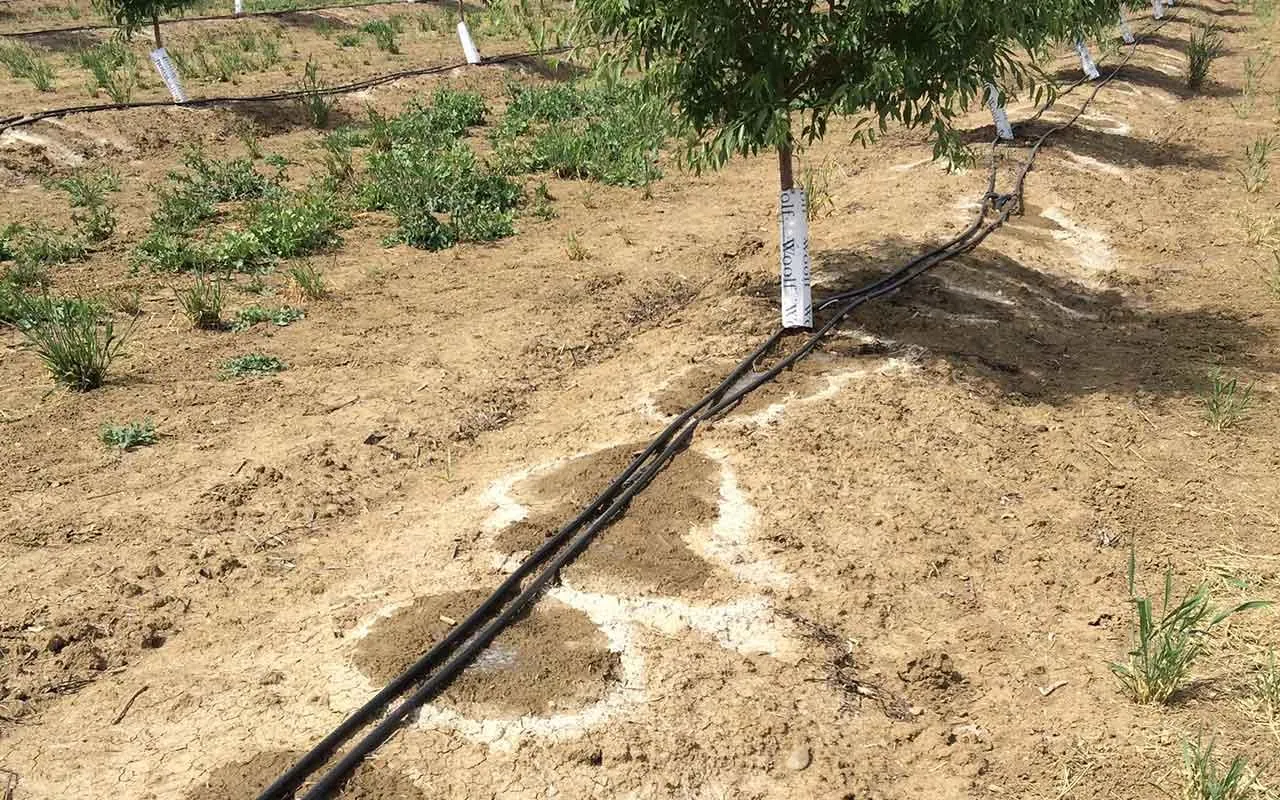
Soil salinity is the accumulation of water-soluble salts in the soil in various forms. It can occur naturally and artificially. Naturally occurring salinity occurs especially in arid and semi-arid regions. In these areas, soluble salts mixed with groundwater through leaching are carried to the upper layers of the soil by capillarity , and then as a result of evaporation, water moves away from the environment and salts remain. Salinity created in soil by artificial means is mostly caused by irrigation and fertilization. Especially in areas where cultivation is intensive, the amount of salinity in the soil increases over many years due to the use of high amounts of fertilizer. This process is further accelerated if fertilization is applied together with drip irrigation. In the drip irrigation method, a smaller area is irrigated rather than the entire soil. Therefore, a more intense fertilizer concentration occurs in this small area (Figure 1).
Salinity is one of the most important soil properties that limits plant growth in agricultural production. Salinization of soil negatively affects plants' water and nutrient uptake. Due to the increase in salt concentration in the plant root area, osmotic pressure increases and it becomes difficult for the plant to absorb water. Additionally, toxic effects occur due to the increase of some ions and salt stress occurs in plants [6]. Fertilizers create a salinity effect at different rates compared to each other. The salt concentration created by a fertilizer in the soil solution gives its salinity index value. Salinity index values of some nitrogenous fertilizers are given in Table 3. Especially in areas where salinity is a problem, fertilizers with a lower salinity index should be preferred.
Table 3. Salinity index values of some fertilizers [7].
| Name | Active substance rate (%) | Salinity index | Salinity index value per unit food* |
|---|---|---|---|
| Anhydrous ammonia | 82 N | 47.1 | 0.57 |
| Ammonium nitrate | 34 N | 104 | 3.06 |
| Ammonium sulfate | 21 N, 24 S | 68.3 | 3.25 |
| Urea | 46 N | 74.4 | 1.62 |
*One unit is equivalent to 9 kg
Eutrophication
Eutrophication can be defined as the increase in aquatic life in waters due to the increase in some plant nutritional elements, the resulting decrease in water quality and the deterioration in aquatic habitats. Fertilizers used in agricultural production mix with surface or subsurface waters if they are used excessively. Fertilizers that mix with water, especially those containing nitrogen and phosphorus, are the most important pollutants that cause eutrophication . Although eutrophication is mostly seen in areas such as lakes and ponds, it can sometimes be seen in rivers and seas (Figure 2).

Due to the increase in nutritional elements , the density of phytoplankton , algae and some aquatic plants in the water increases. When they die, they form a sediment on the water bottom and are broken down by microorganisms. Meanwhile, the amount of dissolved oxygen in the environment decreases rapidly due to intense oxygen consumption. This causes the death of other aquatic creatures, especially fish, and a decrease in the existing water quality.
Increasing Fertilizer Use Efficiency and Preventing Unnecessary Fertilizer Use
Fertilizers, one of the most important inputs of agriculture, have limited effectiveness due to misuse. The most commonly used fertilizer type in plant production is nitrogenous fertilizers. Nitrogenous fertilizers constitute the main source of N2O emission from agricultural soils to the atmosphere. In addition to causing greenhouse gas emissions, they play an important role in many environmental problems as mentioned above. Therefore, they will continue to pose significant risks to the environment unless their use is taken into consideration.
The most important condition for successful fertilization is to meet the nutritional needs of the plant throughout its development period while doing this with minimal damage to the ecosystem.
Fertilizer use efficiency can be defined as the ability of plants to use the nutritional elements they need for healthy development at the optimum level or the ability to create plant parts at the maximum level [8].
Although nitrogen use efficiency varies depending on the applications and environmental factors, it is approximately 25-40% worldwide [9]. Some factors that reduce fertilizer use efficiency and their reduction rates are shown in Table 4.
Table 4. Some factors that reduce the efficiency of fertilizer use [10].
| Factors | Reduction rate (%) |
|---|---|
| Unsuitable seed bed | 10-20 |
| Inappropriate plant variety | 20-40 |
| Late sowing - planting | 20-40 |
| Insufficient watering | 10-25 |
| Diseases | 15-20 |
| Pests | 5-50 |
| Excessive and unnecessary use of fertilizer | 20-50 |
The way to achieve sustainable production in agriculture is to prevent excessive fertilizer use by increasing fertilizer use efficiency and to focus on practices that will preserve soil fertility in the long term.
Applying correct fertilization programs
Excessive and unnecessary use of fertilizer in agricultural production globally is one of the most important issues awaiting solution. It is of great importance to know the nutrient requirements of the plant to be grown for correct fertilization. However, soil properties must be known when creating nutrition programs for plants. Otherwise, it is very difficult to determine the correct amount and appropriate type of fertilizer to be applied. Yield losses occur due to fertilizer application below the plant requirement. In addition, excessive application of fertilizer not only deteriorates productivity and quality, but also harms the environment. The only way to accurately determine the amount and type of fertilizer to be used is to use soil and leaf analysis. Soil samples for fertilization should be taken before sowing or planting, and at the beginning of the growing season for perennial plants.
Animal manure applications or different organic fertilization applications are frequently used methods. Such practices are very important in terms of meeting the nutrient need of the plants. If fertilization in an area will be combined with a different animal manure, animal manure analysis should also be performed before fertilization. The amount of fertilizer to be given should be adjusted accordingly by calculating the plant nutrient contents in animal manure.
When applying nitrogen fertilization, fertilizer should be divided into doses, taking into account the development periods of the plant, and fertilization plans should be supported by appropriate irrigation management. Remaining of applied nitrogen fertilizer on the soil surface or deep infiltration as a result of irrigation reduces the efficiency of the use of fertilizer and causes significant environmental problems.
When using nitrogen, it is important to apply fertilizer at the appropriate time by taking advantage of local weather forecasts to prevent possible nitrogen losses. Nitrogen loss from soil increases proportionally due to the increase in soil temperature and soil water saturation. The relationship between climatic factors and nitrogen loss should be taken into account in the management of agricultural soils. This situation can be seen in Table 5 [11].
Table 5. Estimated N losses due to denitrification depending on soil temperature and water saturation
| Soil Temperature (C⁰) | Number of days saturated with water | Nitrogen loss (% of nitrogen applied) |
|---|---|---|
| 13-16 | 5 | 10 |
| 10 | 25 | |
| 24-27 | 3 | 60 |
| 5 | 75 | |
| 7 | 85 | |
| 9 | 95 |
Using fertilizers that create lower emissions
One of the largest sources of agricultural greenhouse gas emissions is fertilizer applications. Therefore, knowing the effects of different types of fertilizer use on emission rates and choosing suitable fertilizers can help reduce emissions. For this purpose, in a study conducted in China, the greenhouse gas emission amounts of different fertilizer types were compared and the fertilizers with the lowest emissions and lowest costs were tried to be determined [12]. According to the data obtained, when direct N2O emissions from the field are not taken into account, emissions from fertilizer constituted 48% of the total emissions resulting from production. Researchers stated that reducing emissions from fertilizers is a necessary and priority measure, and according to their results, they stated that ammonium bicarbonate, calcium superphosphate and potassium chloride are the fertilizers with the lowest greenhouse gas emissions. It has been pointed out that a 49% decrease in the amount of emissions will be achieved with the use of these fertilizers .
Unlike other nitrogenous fertilizers, when urea fertilizer is applied to the soil, CO2 added during the industrial production process is released. Urea (CH4N2O) turns into ammonium (NH4+), hydroxyl (OH-) and bicarbonate (HCO3-) ions in the presence of water and urease enzymes. The HCO3- formed as a result of the reaction is separated into CO2 and H2O after the addition of lime and thus CO2 is released from the soil [13].
Studies on determining the contribution of different types of fertilizers to greenhouse gas emissions in soils with different characteristics should be increased and care should be taken to choose fertilizers that cause less emissions in those regions.
Increasing soil organic matter content
Correct plant nutrition management in agricultural areas should be considered together with soil organic carbon retention. In general, the use of organic fertilizers and compost will improve the soil organic carbon pool more than the use of inorganic fertilizers. When the amount of organic matter in the soil is low, soil health is negatively affected and productivity decreases. On the other hand, increasing the amount of organic carbon in the soil is also a way to increase carbon sequestration, as it increases the capacity of agricultural ecosystems to absorb atmospheric CO2 and store it in the soil [14]. Burning crop residues after harvest and excessive use of chemical fertilizers leads to a decrease in biological resources, which weakens the potential capacity of the agricultural ecosystem as a carbon sink and may also lead to an increase in emissions caused by fertilization.
In a study conducted for this purpose, crop residues were composted with cattle manure and different applications were tried in winter wheat and corn rotation [15]. In the study, four different fertilizer applications were tried: 100% cattle manure, 100% mineral nitrogen, 75% cattle manure + 25% mineral nitrogen and 50% cattle manure + 50% mineral nitrogen. According to the results obtained, it was stated that replacing chemical fertilizer with organic fertilizer significantly reduced greenhouse gas emissions, and wheat and corn yield increased with the addition of cattle manure. Researchers have emphasized that if chemical fertilizer is replaced with organic fertilizer, the agricultural ecosystem will turn from a carbon source to a carbon sink and greenhouse gas emissions will decrease.
Using enhanced-efficiency fertilizers (EEFs)
Increasing the effectiveness of fertilizers, minimizing possible losses in the soil and ensuring that plants benefit more from the nutrients soil contain has become a widely preferred method in recent years. These fertilizers, which are generally named as enhanced-efficiency fertilizers (EEFs) are defined as "fertilizer products that have properties that increase plant uptake and reduce nutrient loss" [16]. Different methods such as coating, encapsulation and inhibitor addition are used in such products that aim to increase the efficiency of nitrogenous fertilizers. Slow and controlled release fertilizers and inhibitor fertilizers not only have higher nitrogen use efficiency but also have the potential to reduce N2O emissions resulting from fertilization.
Although it is clear that the inclusion of such fertilizers in the nutrition programs of plants is important to increase efficiency in production and reduce greenhouse gas emissions, it seems a necessity to subsidize the resulting cost in some way.
Microbial fertilizers
The intensive use of chemicals in agriculture to meet the increasing food demand in the world causes increasing environmental problems. It becomes inevitable to turn to alternative inputs for a more sustainable production. One of these is microbial fertilizers.
Microorganisms fixes atmospheric nitrogen to soil when applied to seeds or soil, promotes vegetative growth by increasing the availability of plant nutrients or by producing secondary metabolites. Material consisting of microorganisms living in the rhizosphere that can colonize or enter plant tissues is called biological fertilizer [17]. This group of fertilizers, which mostly consists of bacteria that fix atmospheric nitrogen, also includes phosphate-dissolving and hormone-producing bacteria. Bacteria used as biological fertilizer are generally called Plant Growth Promoting Rhizobacter (PGPR). In the studies conducted to date, It has been observed that species especially belonging to the genus Azotobacter, Azospirillum, Burkholderia, Pseudomonas, Bacillus and Paenibacillus stand out as PGPR [18].
Although they are often not sufficient on their own, it may be possible to reduce the use of intensive chemical fertilizer with the use of microbial fertilizers. Generally, active bacteria isolated from soil can be applied successfully, considering their effectiveness and adaptability to the environment in which they are applied.
Benefiting from precision agriculture technologies in fertilization
One of the applications that have become increasingly prevalent in agriculture in recent years is precision farming techniques. It is an application that emerged as a result of the integration of innovations in technology with agriculture and provides significant advantages, especially in large-scale enterprises. Precision agriculture adopts a method based on variable level applications to areas with different characteristics, instead of applying the same application to the entire area in the cultivation area.
Variable rate fertilizer application is one of the applications in precision agriculture and has become a frequently preferred method, especially in the application of nitrogenous fertilizer, in recent years. There are basically two methods used in the realization of variable rate fertilizer applications [19]:
One of these is a map-based variable rate application, which uses maps obtained from parameters measured in the field.
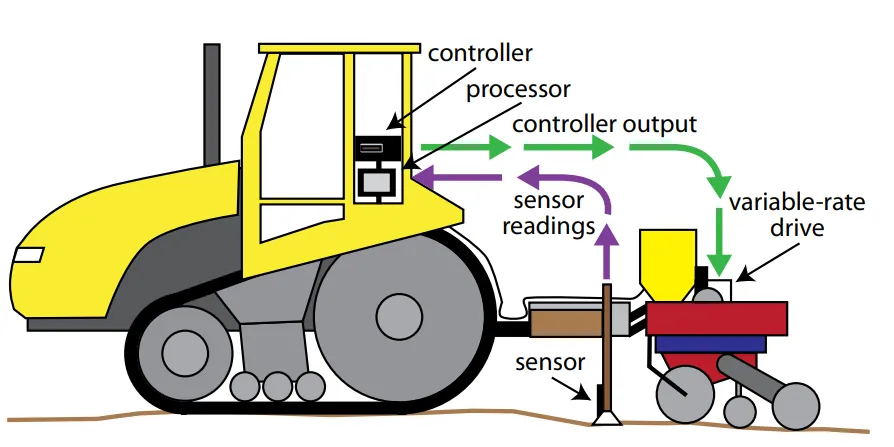
The other method is sensor-based variable rate application. There is no mapping in the sensor-based application, but measurements are taken on the move via real-time sensors based on soil or plant characteristics. The data obtained from these measurements is sent to the variable rate applicator and the application is carried out (Figure 3).
The main purpose of both methods is to adjust the amount of fertilization according to the determined variations in the soil or plants, rather than applying a fixed and equal amount of fertilizer to the entire field.
References
FAO, (2023). FAOSTAT, Food oath Agriculture Organization of the United Nations. http://www.fao.org/faostat/en/#data, ( Acces date : 16.08.2023).
IPCC, (2007) Climate Change 2007: The physical Science Basis . Contribution of Working Group I to the Fourth AssessmentReport of the Intergovernmental Panel on Climate Change [Solomon, S., D. Qin , M. Manning , Z. Chen , M. Marquis , K. B. Averyt , M. Tignor and H.L. Miller ( eds .)]. CambridgeUniversity _ Press , Cambridge, United Kingdom and New York, NY, USA, 996 pp .
IPCC, (2013). Climate Change 2013: The physical Science Basis . Contribution of Working Group I to the Fifth Assessment Report of the Intergovernmental Panel on Climate Change . [ Stocker , T.F., D. Qin , G.-K. Plattner , M. Tignor , S. K. Allen , J. Boschung , A. Nauels , Y. Xia , V. Bex and P. M. Midgley ( eds .)]. CambridgeUniversity _ Press , Cambridge, United Kingdom and New York, NY, USA, 1585 pp .
Sönmez İ, Demir H, (2011). Agricultural Nitrate Pollution and Its Negative Effects. 1st Ali Numan Kıraç Agricultural Congress and Fair with International Participation, 27-30 April, 2011, Proceedings Book: 287-294, Eskişehir.
Ekici, K., Alişarlı M. & Sancak, YC, (2008). “ Nitrate and nitrosamines in cheese varieties ”, YYÜ. Journal of the Faculty of Veterinary Medicine. 2:71-72
Gürel A, Avcıoğlu R, (2001). “Stress Resistance Physiology in Plants”, chapter 21, Editors: Özcan, S., Gürel, E., Babaoğlu, M., ''Plant Biotechnology II, Genetic Engineering and Applications'', Selçuk University Foundation Publications, 308-313.
Mortvedt JJ, (2001). Calculating Salt Index. Fluid Journal . 9(2):8-11.
Blair , G., (1993). nutrients efficiency - What do we do really mean ? In : PJ Randall et al. ( Eds .), Genetics Aspects of Plant Mineral Nutrition . Proc . 4th Int . Symp . of genetics Aspects of Plant Mineral Nutrition , pp.205-13, Kluwer Academic Publications, Dordrecht, The Netherlands .
Lenka S, Rajendiran S., Vassanda Coumar M., Dotaniya ML and Saha JK, (2016). impact of Fertilizers use on Environmental Quality . Souvenir of National Seminar on “ Environmental concern for fertilizer use in future ” at Bidhan chandra Krishi Viswavidyalaya , Kalyani on February 26, 2016. file:///C:/Users/pc/Downloads/Fertilizeruseonenvironment-JKSaha%20(2).pdf ( Acces data: 10.04.2019).
Karaman, M.R., & Turan, M. (2012). Sustainable Management Strategies oath Fertilizer Efficiency Parameters in Plant Nutrition . Soil Water Journal, 1(1), 15-21.
Anonymous, (2017). Code of Good Agricultural Practices. Good for Preventing Nitrate Pollution in Waters Caused by Agricultural Activities Agriculture Communiqué on the Code of Practices , COMMUNIQUE NO: 2016/ 46, https://www.resmigazete.gov.tr/eskiler/2017/02/20170211-12.htm, ( Acces data: 21.08.2023).
Wang , ZB, Chen , J., Mao, S.C., Han, Y.C., Chen , F., Zhang , LF, ... & Li , C.D. (2017). Comparison of greenhouse gas emissions of chemicals fertilizer types in China's crop production . Journal of Cleaner Production , 141, 1267-1274.
Snyder , CS, Bruulsema , TW, Jensen , TL, & Fixen . PE (2009). Review of greenhouse gas emissions from crop production systems oath fertilizer management effects . Agriculture , Ecosystems and Environment, 133: 247–266
Elbasiouny H, El- Ramady H, Elbehiry F, Rajput VD, Minkina T, Mandzhieva S, 2022. Plant nutrition below climate change oath soil carbon sequestration . Sustainability 2022, 14, 914. https://doi.org/10.3390/su14020914
Liu , H., Li , J., Li , X., Zheng , Y., Feng, S., & Jiang , G. (2015). Mitigating greenhouse gas emissions through replacement of chemicals fertilizer with organic manure in a temperate farmland . Science Bulletin , 60(6), 598-606.
Association of Americans plants Food Control Officials , (2013). AAPFCO Official Publication 65. AAPFCO, Little Rock , AR.
Çakmakçı R., (2005). Use of Rhizobacteria in Agriculture to Promote Plant Growth . Atatürk University Faculty of Agriculture Journal. 2005; 36(1): 97-107.
Çakmakçı, R., (2014). " Effect Mechanisms and Properties of Microorganisms That Can Be Used as Microbial Fertilizer , " Microbial Fertilizer Workshop , 23-24 October, Kastamonu, TC Ministry of Food, Agriculture and Livestock, 60th Anniversary. Directorate of Soil Fertilizer and Water Resources Central Research Institute , ILgaz /Kastamonu, Turkey , pp.5-17, 2014
Grisso , R., Alley , M., Thomason , W., Holshouse , D., & Roberson , G. T. (2011). precision farming tools : variable -rate application . Virginia Cooperative Extension , 442-505. https://vtechworks.lib.vt.edu/bitstream/handle/10919/47448/442-505_PDF.pdf?sequence=1 ( Acces data: 22.08.2023).