
Module 5 · Chapter 6
Adaptation strategies of animals to climate change
Adaptation to climate change in livestock encompasses measures stemming from the animals themselves, as well as those instigated by humans. Livestock naturally adapt through various mechanisms to cope with climate conditions, while human adaptation involves implementing practices that aid animals in adapting to climate change and enhancing livestock performance. In the context of livestock, adaptation actions can be classified into two primary groups: animal and human adaptation responses/strategies [1].
The effects of climate change on livestock production are diverse, and thermal stress is considered the greatest challenge for farm animals [2]. It's important to note that animals are seldom subjected to just one stressor. In addition to heat stress, they may experience concurrent issues such as insufficient feeding, water scarcity, and poor nutrition. The combined impact of multiple stressors may be more than just the sum of their individual effects [3].
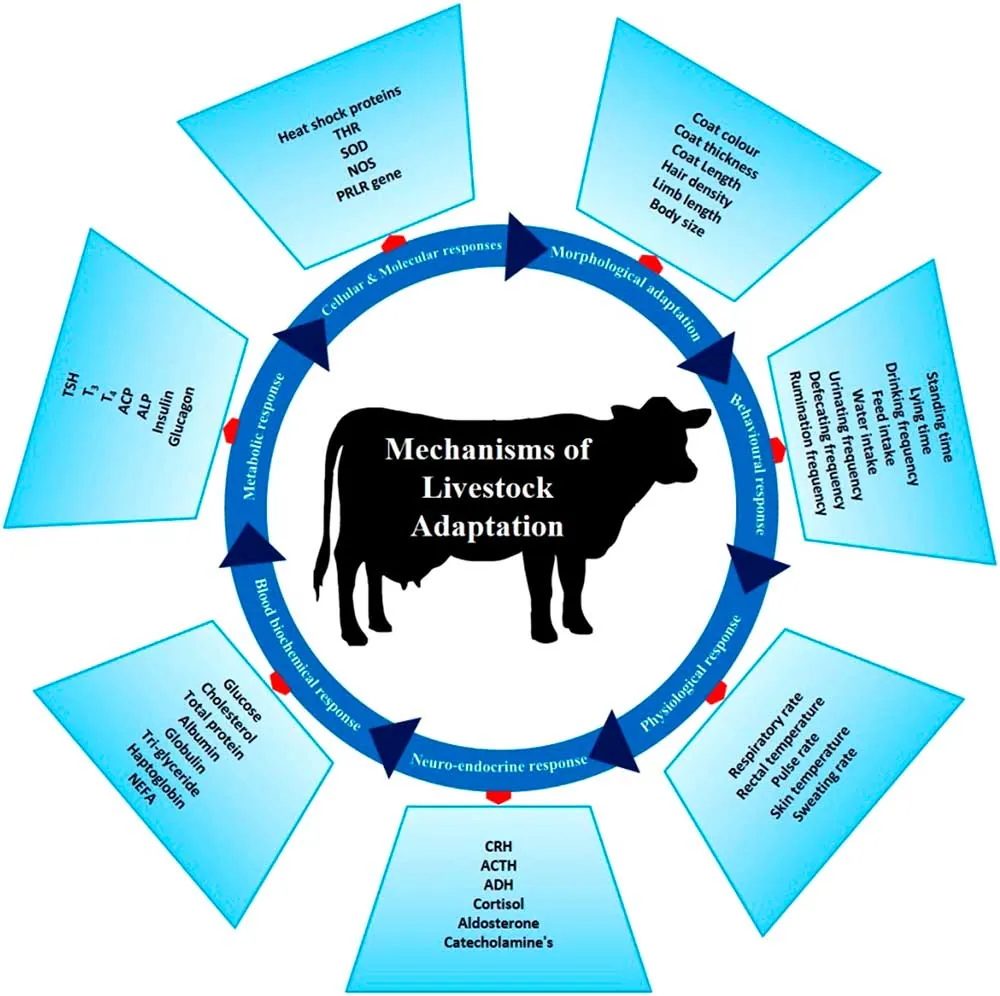
THR=thyroid hormone receptor; SOD=super oxide dismutase; NOS=nitrous oxide synthase; PRLR=prolactin receptor; CRH=corticotropin-releasing hormone; ACTH=adrenocoticotropic hormone; ADH=antidiuretic hormone; NEFA=non-esterified fatty acids; TSH=thyroid-stimulating hormone; T3=triiodothyronine; T4=thyroxine; ACP=acid phosphatase; ALP=alkaline phosphatase.
However, the animals have inherent capabilities to withstand climate-related risks through the process of adaptation. In the animal's response to environmental stressors, two phases are distinguished: the initial response to environmental change and the later process triggered by the endocrine system. The resulting changes are aimed at reducing the impact of stress on the animal, allowing it to function more efficiently in a challenging environment. If stressful conditions persist across generations, these changes become genetically fixed adaptations [4].
This chapter aims to gather and synthesize information on significance of farm animals adaptation pathways and the different strategies to help them cope with adverse environmental conditions. In the face of climate change, the resilience and adaptability of farm animals stand as a testament to the intricacies of evolution and survival. To regain their homeostasis, animals need to adapt to the current climate conditions. Accordingly, their responses to specific stressors could be behavioural, physiological, biochemical, immunological, anatomical, or a combination of these factors (Figure 1.). These responses can vary depending on their prior exposure to stressors, the duration and severity of the stress, their physiological state, and environmental constraints [5;6]. Although there are significant differences in heat tolerance between species, there is also variation between races within a species. Polygastric animals generally show a higher level of thermal tolerance compared to monogastrics, but there is overlap in environmental ranges for species and breeds. The ability to regulate body temperature depends on complex interactions between anatomical and physiological factors. Characteristics such as skin and coat properties, sweating and breathing capacity, tissue isolation, surface area to body weight or relative lung size, as well as endocrine profiles and metabolic heat production are known to influence heat load, but appropriate physiological, behavioral or genetic the mechanisms are not yet elucidated [7;8].
Physiological Strategies
Physiological strategies are the internal responses of farm animals to climate change that allow them to cope with the changing environmental conditions. Physiological strategies encompass the animal's physiological responses, including alterations of bodily functions, metabolic and endocrine, to maintain homeostasis and ensure their survival in a changing climate [9]. Animals have evolved several physiological strategies to cope with climate change [10]. For example, they have mechanisms in place to regulate body temperature, such as panting and sweating.
Elevating the respiration rate by panting is a key physiological mechanism through which heat-stressed animals dissipate extra heat by evaporating more moisture to the surroundings [11]. An increased pulse rate allows heat-stressed animals to enhance circulation and redistribute blood flow to the skin, which allows for more successful release of heat to the external environment [12]. Additionaly, the elevated rectal temperature in heat-stressed animals contributes to additional dissipation of excess heat to maintain homeostasis [13]. Providing specific regulation of kidney function to maintain appropriate hydration levels (excess water) under high temperatures is also considered one of the important physiological responses.
Pigs do not have sweat glands, and they also have relatively small lungs in relation to their body size, which reduces their cooling by panting. This makes them especially sensitive to the effect of heat stress, so the mechanism of heat release through the skin is of great importance for them.
Goats are well known for their remarkable ability to reduce their metabolic rate and enter a state of torpor during periods of extreme heat or cold, which helps them conserve energy and survive harsh conditions [14].
Within the physiological responses to heat stress, it's crucial to highlight the endocrine response. Specifically, the adrenal and thyroid glands, which are part of the endocrine system, are pivotal in helping animals adapt to heat stress [15].
The effect of high ambient temperature as a stress stimulus activates the hypothalamic-pituitary-adrenocortical axis (HPA) and the sympatho-adrenal medullary axis (SAM) [15]. This results in the release of hormones responsible for the adaptation of animals to heat stress: glucocorticoids, catecholamines, antidiuretic hormone (ADH), thyroid hormones, mineralocorticoids, growth hormone (GH) and prolactin (PRL) [16]. The role of these hormones in ensuring thermal homeostasis is different. For example, increased cortisol production helps animals meet additional energy needs for their adaptive processes by using the gluconeogenesis pathway in the liver [17]. A significant decrease in the concentration of triiodothyronine (T3) and thyroxine (T4) was observed in the plasma and milk of lactating cows, which is considered another adaptive mechanism to reduce additional heat load caused by increased metabolic activity [18]. In addition, compromised pituitary-thyroid axis activity was observed in heifers, with approximately 40%, 45.4%, and 25.9% reductions in TSH, T4, and T3 levels during heat stress, indicating their ability to produce less metabolic heat in an attempt to adapt to exposure to heat stress [19].
Biochemical Strategies
Farm animals have developed certain biochemical strategies to adapt to climate change. These strategies involve the production and regulation of specific biochemical compounds that help animals cope with the challenges posed by changing climates. Two main adaptive strategies could be distinguished as biochemical: blood biochemical response (1) and cellular and molecular response (2):
Blood biochemical response
When animals experience heat stress, specific biochemical changes occur to aid in adaptation and the maintenance of homeostasis. Studies have identified significant alterations in various blood biochemical parameters, including packed cell volume (PCV), hemoglobin (Hb), glucose, albumin, total protein, total cholesterol, and non-esterified fatty acids (NEFA).
-Prolonged exposure to heat stress leads to a decrease in erythrocyte and hemoglobin levels [20]. This is because exposure to high ambient temperatures leads to increased oxygen consumption, resulting in elevated blood oxygen partial pressure, which in turn reduces erythropoiesis.
-The decline in PCV can be attributed to the excess water in the circulatory system, which is necessary for dissipating heat through hemodilution [21].
-Under the influence of heat stress, the level of albumin in the plasma increases, possibly due to its antioxidant effect on the heightened free radicals during heat stress [22]. One example of a biochemical adaptation in livestock, specifically cattle, is the regulation of renal function to maintain hydration levels under high temperatures. These adaptations involve changes in blood composition, such as an increase in plasma albumin levels to improve antioxidant capacity and protect against oxidative damage caused by heat stress.
-Furthermore, the level of glucose typically decreases as a result of reduced gluconeogenesis [23], while the decrease in NEFA levels in plasma is linked to its high consumption as an energy source in the liver and peripheral tissues [24]. According to Baumgard and Rhoads [25], the reduction in NEFA levels can be associated with the utilization of glucose to reduce metabolic heat during heat stress.
Cellular and molecular response
The cellular response to heat stress is a vital part of animals' ability to tolerate high temperatures. When exposed to elevated temperatures, gene networks within and between cells activate mechanisms that lead to cellular adaptation. One crucial aspect of this adaptation is the production of heat shock proteins (HSPs), which safeguard cells from heat-induced damage and maintain cellular stability [26]. HSPs are essential for preventing protein denaturation and aggregation during heat stress conditions.
In response to heat stress, cells decrease DNA synthesis, transcription, and translation processes, modify protein activity, and boost HSP production [27]. Additionally, there is an increase in the oxidation of glucose and amino acids, a reduction in fatty acid metabolism, activation of the endocrine system in reaction to stress, and stimulation of the immune system [4]. Genes linked to HSP synthesis, along with other genes related to heat tolerance, can serve as potential indicators for the adaptation of cattle and other farm animals to climate change stressors [28]. Identifying these genes, which contribute to cellular heat tolerance, can be used in breeding programs through the use of markers or for creating new heat-tolerant animal breeds.
Immunological Strategies
Climate change leads to a decline in animal welfare and health through the proliferation of vector-borne diseases and its detrimental effect on the animals' immune system, causing immune suppression and heightened susceptibility to infections [10].
Heat stress can disrupt the balance of immune cells, decrease antibody production, and impair the function of immune organs, such as the thymus and spleen, leading to increased susceptibility to infections [29].
Different kinds of farm animals, exhibit varied responses to heat stress in terms of their immune function and ability to combat pathogens. However, there are some physiological limitations in this, primarily conditioned by genetics and the specifics of the breeding environment.
Unlike domestic animals raised in moderate climates and experiencing occasional heat shocks, their wild counterparts and breeds raised in warm and dry regions have developed certain immune system characteristics over time, making them more resistant to heat stress conditions. For example, one of the species most negatively affected by heat stress is cattle, and particularly dairy cows [30]. In contrast to cattle, the dromedary camel can be considered a model of different immune reactivity to heat stress, thus helping to better understand thermotolerance mechanisms developed in livestock adapted to hot climates. Hussen's study [31] showed enhanced phagocytosis and reactive oxygen species (ROS) production activities of heat-challenged camel neutrophils and monocytes toward S. aureus, which is in contrast to the reported inhibitory effect of heat stress on antimicrobial functions of bovine neutrophils. Within breeds of cattle, Bos indicus (Zebu) cattle, have shown better adaptation to heat stress due to their heat tolerance and ability to maintain immune function under high temperatures [32].
The higher expression of immune response genes such as toll-like receptor (TLR) TLR2/4 and interleukins (IL) IL2/6 was also reported in heat-stressed Tharparkar cattle, suggesting active immune functions in these breeds to counter the effects of heat stress [33].
Similar results of increased TLR1, TLR4, and TLR5 expression were reported in indigenous Osmanabadi goats exposed to environmental stressors, such as heat stress, nutritional stress, and combined heat and nutritional stress [34]. The enhanced TLR expression clearly indicates the active immune system of this breed even during heat stress conditions, firmly establishing their adaptive capability.
Heat stress in sheep can compromise their immune response, making them more susceptible to parasitic infections and respiratory diseases. However, some sheep breeds, such as the African Damara breed, have evolved in hot climates and exhibit better resilience to heat stress, maintaining their immune function and resistance to pathogens [35]. The research conducted by Astuti et al. [36] demonstrated that the Hungarian Cigaya, as an indigenous breed, exhibits superior thermo tolerance and immune capabilities under heat stress when compared to the Hungarian Merino and the White Dorper, a tropical breed. The review by Daramola and Adeloye [37] indicates that goats typically have a higher count of lymphocytes than neutrophils in their circulation, suggesting a well-developed immune system in this species, and thus, animals adapted to thermal stress are likely to experience better overall health due to their physiological adaptations and cellular and molecular responses.
FAO [38] provides a catalog of breeds, predominantly from developing nations, known for their resistance or tolerance to trypanosomiasis, tick infestation, tick-borne illnesses, internal parasites, dermatophilosis, or foot rot, encompassing 59 cattle breeds, 33 sheep breeds, 6 goat breeds, 5 horse breeds, and 4 buffalo breeds.
While solid scientific evidence is currently lacking, it is assumed that tropical breeds of domestic animals not only exhibit better tolerance to heat stress but also possess a more adapted immune system for pathogens typical of regions with higher ambient temperatures. This potential advantage can be leveraged in domestic animal breeding programs as a promising technique for enhancing heat tolerance.
Anatomical & Morphological strategies
One significant response of farm animals to thermal stress is the anatomical changes that allow animals to cope with and survive in changing environmental conditions [39]. This phenomenon, often overlooked, sheds light on the plasticity and adaptability of species in the face of climate change.
The primary anatomical changes may involve alterations in body size, appendages, coat color and type, and the respiratory system [40]. Furthermore, animals may develop specific morphological characteristics such as larger salivary glands, an expanded surface area of the absorptive mucosa, and the capacity to significantly increase the volume of the foregut when consuming high-fibre meals [41].
Coat Colour, Type and Density
The hair coat's physical structure serves as the primary barrier between the body and the environment. Various hair characteristics directly influence heat exchange with the surroundings. Hair structure provides protection against direct solar radiation and facilitates convection and heat loss through evaporation. Key characteristics include coat reflectance, hair length, and hair density per unit area [8].
In tropical regions, animals with light-colored coats reflect over half of the direct solar radiation, unlike dark-colored animals [8]. Adaptations in these regions involve having light-colored hair coats, such as white, light red, or red, which aid in reflecting solar radiation and minimizing heat absorption. Cattle in hot and arid environments benefit from their light-colored hair coats as a protective mechanism against solar radiation, reflecting rather than absorbing the radiation. Da Silva et al. [42] determined that coat color affects the thermoregulatory behavior of dairy cows. Light-coated cows showed greater resistance to heat stress compared to dark-coated cows, which affects their shade-seeking and heat-avoidance behavior. Furthermore, cattle in hot environments tend to have smooth, light, short, and thin hairs, as well as fewer hair follicles per unit area, facilitating maximum heat dissipation during stressful conditions. Thus, the combination of a light-colored hair coat and specific hair characteristics enables cattle in hot and arid environments to better cope with high temperatures [2].
Sheep have developed thick wool coats that act as insulation during cold weather and help regulate body temperature in extreme heat [43]. Undesirable hair coat traits in sheep, such as dark and long hair or dense coats, can cause overheating. Conversely, lower coat thickness and less dense coats with short and thick hairs facilitate the dissipation of excessive body heat and contribute to homeostasis and better performance. This indicates an advantage for hair sheep over wool sheep. Indigenous sheep breeds in arid and semi-arid regions possess morphological characteristics such as carpet-type wool, which provides better protection against direct radiation. This type of wool also allows efficient heat dissipation during evaporation [44]. Some sheep breeds possess a fat tail considered a morphological adaptation that allows better heat dissipation [45].
Body size
Body size directly affects energy requisite for maintenance, growth, and production so changes in functional traits like body size have significant repercussions for the thermal biology and energetics of animals. Therefore, under conditions of climate change, one of the adaptive responses may be to reduce body size. For example, in hotter climates, animals may decrease in size as smaller bodies have a higher surface area to volume ratio, allowing for better heat dissipation [46]. Elayadeth-Meethal et al. [47] examined the adaptive tolerance to heat stress in dwarf cattle breeds (DCB, Bos taurus indicus) and compared their thermoregulatory responses with those of standard size cattle breeds (SCB, crossbred, Bos taurus indicus × Bos taurus taurus). It was found that While SCB can acclimate to higher temperatures in the short term, they reach their tolerance limit under prevailing tropical conditions, whereas DCB are well adapted to the warmer climate. Increased haemoglobin concentration and reduced cellular size of DCB additionally contribute to enhanced thermal tolerance.
Appendages
The size and characteristics of an animal's extremities, like tails, beaks, and legs, are crucial for regulating its body temperature through heat exchange. The larger surface areas for sweating or panting, along with increased blood flow to peripheral tissues, exemplify the anatomical evolution of farm animals to regulate their body temperature effectively and minimize the risk of overheating. This leads to variations in animal morphology across different geographic areas, with animals in warmer regions having larger extremities relative to overall body size. This phenomenon, known as 'Allen's rule,' has not been receiving sufficient attention in relation to its response to climatic warming [48]. According to this rule, larger extremities relative to body size provide a greater surface area for effective dissipation of body heat. As a result, larger extremities can be advantageous in warmer climates but may not be as useful in cooler climates.
In birds, body parts like bills contain numerous blood vessels and lack feather coverage, making them crucial for heat release. This also applies to the unfeathered or unfurred legs of birds and mammals, which aid in regulating body temperature. In mammals, ears and tails also play a role in releasing heat. The good examples are Brahman cattle and Nubian goat. The utilization of these body parts for temperature regulation is believed to underlie the patterns observed in Allen's rule, as these surfaces offer an efficient means of adjusting heat dissipation.
Respiratory system
Additionally, the respiratory system of farm animals can undergo modifications as a response to climate change [10]. For instance, animals may develop larger lung capacities or altered breathing patterns to enhance their ability to regulate body temperature and cope with heat stress.
Morphological Adaptations in Diverse Farm Animal Species
When it comes to climate change, particularly heat and drought, goats demonstrate the greatest adaptation abilities among all domestic animals. They can dissipate heat through their horns and thrive on minimal vegetation. Goats with droopy, long ears and loose skin, such as Boer and Nubian breed, tend to fare better in challenging, arid conditions.
Sheep are less tolerant of heat compared to goats, even though wool offers some defense against high temperatures. Sheep with hair instead of wool handle heat even better. For instance, breeds like the fat-tailed Red Maasai and the Sahel-type thrive in conditions with limited water and sparse vegetation. The South African Dorper and the Karakul sheep of Central Asia's deserts excel in drought conditions, surviving severe water shortages by storing fat in their tails, which serves a similar function to a camel's hump.
Continental cattle breeds, particularly highly productive dairy breeds, are susceptible to the impact of high temperatures, unlike their tropical counterparts from Asia and Africa (Zebu, Brahman, Gir, etc.). Therefore, to enhance their ability to survive in changing climate conditions, it is advisable to introduce genes such as the slick gene for short hair, elongated body shape, and other genes from the genotype of tropical cattle.
In poultry, the absence of feathers on the neck in the Naked Neck chicken provides a distinct advantage in coping with heat stress. Additionally, chickens with larger wattles and combs also fare better in such conditions.
Thick fat under the skin, a lack of insulating fur, small lungs, inability to sweat and pant define pigs as the most sensitive species to heat stress. Duroc exhibits a moderate level of heat stress resistance, but certain breeds originating from the warmer regions of southern China, such as Luchuan pigs, Diannan small-ear pigs, Bamaxiang pigs, and Wuzhishan pigs, possess heat-resilience traits that could aid in genetic adaptation solutions.
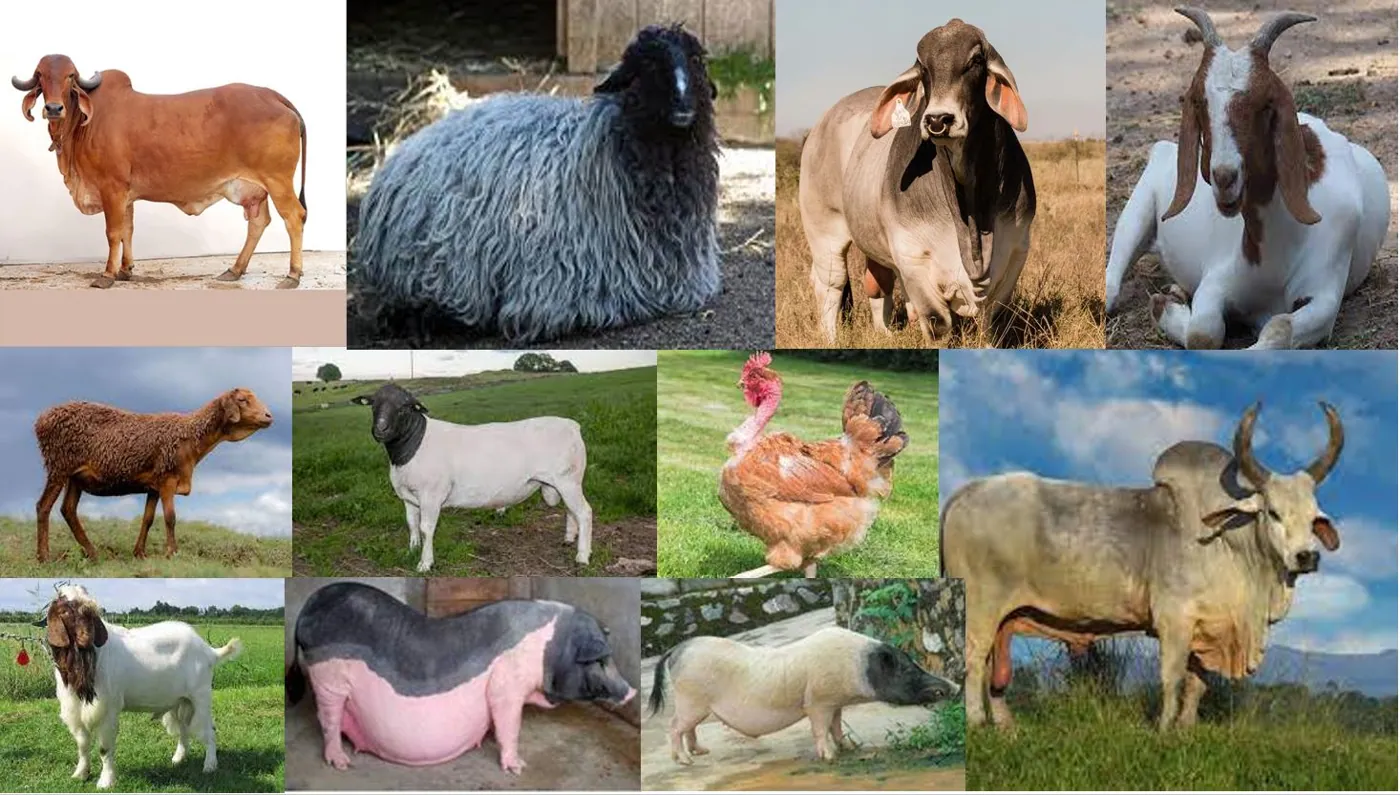
Analyzing the anatomical adaptations of farm animals in response to climate change is essential for devising effective strategies to sustain livestock production in the face of global warming. Through the study and understanding of these adaptations, researchers and livestock managers can work towards implementing measures to enhance the well-being and productivity of farm animals in a changing climate.
Bihavioral Strategies
In addition to physiological, biochemical, immunological, and anatomical adaptations, farm animals also employ behavioral strategies to cope with climate change [10]. These strategies involve alterations in their daily activities and movements to mitigate the impact of heat stress and maintain thermal homeostasis [43]:
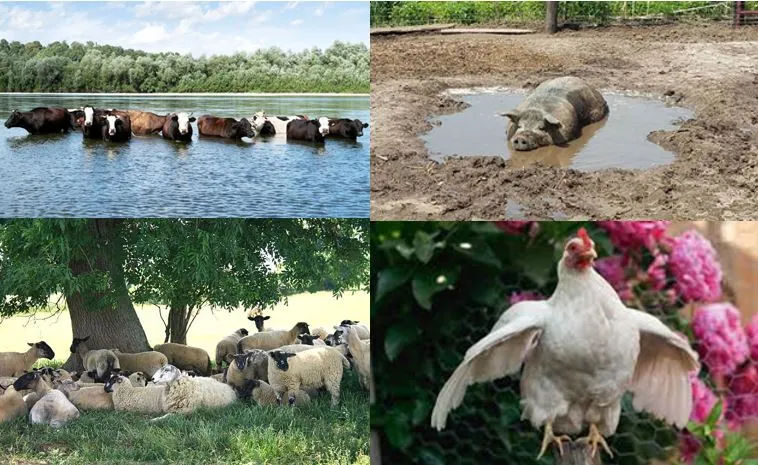
-Seeking shaded and cooler areas, bathing or splashing water to reduce exposure to direct sunlight and cool down [9;10]. For instance, it has been observed that cattle generally prefer tree shade over man-made shaded structures due to the high evaporative cooling provided by tree leaves [49]. Poultry cools down by spreading their wings, while pigs, being the most sensitive, cool down in the mud and by lying on cooler surfaces.
-As the heat load increases, cows tend to reduce their resting time and increase their time spent standing [50]. This way, they increase their body surface area, facilitating evaporative heat loss and potentially averting radiative and convective heat from the ground [51]. However, the use of sprinklers and fans on farms has been shown to effectively decrease the heat load, thereby increasing the cows' resting time.
-Changes in diet and foraging behavior include reduced food intake to lessen the metabolic load of the organism. In grazing cows, a shift to night grazing is observed at extremely high daytime temperatures.
-As the heat load increases, the frequency of defecation and urination decreases, primarily depending on the availability of feed, water, and environmental temperature [52]. Heat-stressed cows have been reported to exhibit a significant decrease in urine frequency.
-There is also an increased need for water during severe ambient conditions. Water consumption rises under heat stress conditions, and cows typically prefer water with a moderate temperature that is neither too cold nor too hot. Experts often recommend providing cold water during hot conditions or water below body temperature to help maintain body temperature.
The ability of farm animals to exhibit certain forms of behavior during heat stress reflects their innate and instinctive understanding of environmental cues and their ability to adapt their daily routines to survive.
References
Gaughan, J. B., Sejian, V., Mader, T. L., & Dunshea, F. R. (2019). Adaptation strategies: Ruminants. Animal Frontiers, 9(1), 47–53.
Henry, B., Eckard, R., & Beauchemin, K. A. (2018). Review: Adaptation of ruminant livestock production systems to climate changes. Animal, 12, s445–s456.
Cheng, M., McCarl, B., & Fei, C. (2022). Climate Change and Livestock Production: A Literature Review. Atmosphere, 13(1), Article 1.
Collier RJ, Collier JL, Rhoads RP, Baumgard LH. (2008). Invited review: genes involved in the bovine heat stress response. J Dairy Sci, 91, 445-454.
Athira P. Ratnakaran, V. Sejian, V. Sanjo Jose, Shalini Vaswani, M. Bagath, G. Krishnan, V. Beena, P. Indira Devi, Girish Varma and R. Bhatta (2017). Behavioral Responses to Livestock Adaptation to Heat Stress Challenges. Asian Journal of Animal Sciences, 11: 1-13.
Sejian, V., Bhatta, R., Gaughan, J. B., Dunshea, F. R., & Lacetera, N. (2018). Review: Adaptation of animals to heat stress. Animal, 12(s2), s431–s444.
Hall S.J.G. (2004) Livestock Biodiversity. Genetic Resources for the Farming of the Future. Blackwell, Oxford, 264 pp.
McManus C., Prescott E., Paludo G.R., Bianchini E., Louvandini H. & Mariante A.S. (2008) Heat tolerance in naturalized Brazilian cattle breeds. Livestock Science 120, 256–64.
Zhang, Y. W., McCarl, B. A., & Jones, J. N. (2017). An Overview of Mitigation and Adaptation Needs and Strategies for the Livestock Sector. Climate, 5(4), 95–95.
Bernabucci, U. (2019). Climate change: Impact on livestock and how can we adapt. Animal Frontiers, 9(1), 3–5.
Renaudeau, D., Collin, A., Yahav, S., de Basilio, V., Gourdine, J. L., & Collier, R. J. (2012). Adaptation to hot climate and strategies to alleviate heat stress in livestock production. Animal : an international journal of animal bioscience, 6(5), 707–728.
Maibam U, Hooda OM, Sharma PS, Singh SV, Upadhyay RC. (2017). Seasonal change in oxidative stress markers in blood plasma of Tharparkar (Bos indicus) and Karan Fries (Bos indicus x Bos taurus) cattle under tropical climate. Int J Curr Microbiol App Sci, 6, 1720-30.
El-Tarabany MS, El-Tarabany AA, Atta MA. (2017). Physiological and lactation responses of Egyptian dairy Baladi goats to natural thermal stress under subtropical environmental conditions. Int J Biometeorol, 61, 61-68.
Berihulay, H., Abied, A., He, X., Jiang, L., & Ma, Y. (2019). Adaptation Mechanisms of Small Ruminants to Environmental Heat Stress. Animals, 9(3), Article 3.
Romanello N, Junior JD, Junior WB, Brandão FZ, Marcondes CR, Pezzopane JR et al. (2018). Thermoregulatory responses and reproductive traits in composite beef bulls raised in a tropical climate. Int J Biometeorol, 7, 1-2.
Sheba MJ, Kumar M, Balasubramanian P, Dharmaraj M, Mohankumar PS. (2012). Neuroendocrine regulation of adaptive mechanisms in livestock. In: Sejian V, Naqvi SMK, Ezeji T, Lakritz J, Lal R. (Eds.), Environmental stress and amelioration in livestock production. Springer-Verlag Publisher, New York, 263-298.
Chen Y, Arsenault R, Napper S, Griebel P. (2015). Models and Methods to Investigate Acute Stress Responses in Cattle. Animals, 5, 1268-1295.
Zhang L, Ying SJ, An WJ, Lian H, Zhou GB, Han ZY. (2014). Effects of dietary betaine supplementation subjected to heat stress on milk performances and physiology indices in dairy cow. Genetics and Molecular Research, 13, 7577-7586.
Kahl S, Elsasser TH, Rhoads RP, Collier RJ, Baumgard LH. (2015). Environmental heat stress modulates thyroid status and its response to repeated endotoxin challenge in steers. Domest Anim Endocrinol, 52, 43-50.
Marai IF, Habeeb AA. (2010). Buffaloes reproductive and productive traits as affected by heat stress. Trop Subtrop Agroecosyst, 12, 2.
Garkal RA, Kekan PM, Kharde SD, Munde VK, Narladkar BW, Vaidya MS. (2016). Effect of different housing systems on haematological parameters of buffaloes. Buffalo Bull, 35, 191-198.
Rasooli A, Nouri M, Khadjeh GH, Rasekh A. (2004). The influences of seasonal variations on thyroid activity and some biochemical parameters of cattle. Iranian J Vet Res, 5, 1383-2004.
Alberghina D, Piccione G, Casella S, Panzera M, Morgante M. (2013). The effect of the season on some blood metabolites and haptoglobin in dairy cows during the postpartum period. Arch Anim Breed, 56, 354-359.
Skibiel AL, Zachut M, do Amaral BC, Levin Y, Dahl GE. (2018). Liver proteomic analysis of postpartum Holstein cows exposed to heat stress or cooling conditions during the dry period. J Dairy Sci, 101, 705-716.
Baumgard LH, Rhoads RP. (2013). Effects of heat stress on postabsorptive metabolism and energetics. Ann RevAnim Biosci, 1, 311-337.
Basirico L, Morera P, Primi V, Lacetera N, Nardone A, Bernabucci U. (2011). Cellular thermotolerance is associated with heat shock protein 70.1 genetic polymorphisms in Holstein lactating cows. Cell Stress Chaperones, 16, 441-448.
Saxena VK, Krishnaswamy N. Molecular mechanisms of livestock adaptation. In: Environmental Stress and Amelioration in Livestock Production. Sejian V, Naqvi SMK, Ezeji T, Lakritz J, Lal R (eds). Springer-Verlag, Germany; 2012. p. 299-315.
Kumar J, Madan AK, Kumar M, Sirohi R, Yadav B, Reddy AV, et al. (2017). Impact of season on antioxidants, nutritional metabolic status, cortisol and heat shock proteins in Hariana and Sahiwal cattle. Biol Rhythm Res, 1-10.
Caroprese, M., Bradford, B. J., & Rhoads, R. P. (2021). Editorial: Impact of Climate Change on Immune Responses in Agricultural Animals. Frontiers in Veterinary Science, 8, 732203.
Dahl, G. E., Tao, S., & Laporta, J. (2020). Heat Stress Impacts Immune Status in Cows Across the Life Cycle. Frontiers in Veterinary Science, 7.
Hussen, J. (2021). Changes in Cell Vitality, Phenotype, and Function of Dromedary Camel Leukocytes After Whole Blood Exposure to Heat Stress in vitro. Frontiers in Veterinary Science, 8.
Hansen, P. J. (2004). Physiological and cellular adaptations of zebu cattle to thermal stress. Animal reproduction science, 82, 349-360.
Bharati J, Dangi SS, Mishra SR, Chouhan VS, Verma V, Shankar O, Bharti MK, Paul A, Mahato DK, Rajesh G and Singh G 2017. Expression analysis of toll like receptors and interleukins in Tharparkar cattle during acclimation to heat stress exposure. Journal of Thermal Biology 65, 48–56.
Sophia I, Sejian V, Bagath M and Bhatta R 2016. Quantitative expression of hepatic Toll-Like Receptor 1–10 mRNA in Osmanabadi goats during different climatic stresses. Small Ruminant Research 141, 11–16.
Almeida, A. M. (2011). The Damara in the context of Southern Africa fat-tailed sheep breeds. Tropical Animal Health and Production, 43(7), 1427–1441.
Astuti, P. K., Bagi, Z., Bodrogi, L., Pintér, T., Skoda, G., Fajardo, R., & Kusza, S. (2023). Hungarian indigenous Tsigai, a promising breed for excellent heat tolerance and immunity. Saudi Journal of Biological Sciences, 30(9), 10374737
Daramola J.O., Adeloye A.A. (2009): Physiological adaptation to the humid tropics with special reference to the West African Dwarf (WAD) goat. Tropical Animal Health and Production 41, 7, 1005–1016.
FAO (2007) In: The State of the WorldÕs Animal Genetic Resources for Food and Agriculture (Ed. by B. Rischkowsky & D. Pilling). FAO, Rome, 511 pp.
Lees, A M., Sejian, V., Wallage, A L., Steel, C C., Mader, T L., Lees, J C., & Gaughan, J B. (2019, June 6). The Impact of Heat Load on Cattle.
Carabaño, M. J., Ramón, M., Menéndez-Buxadera, A., Molina, A., & Díaz, C. (2019). Selecting for heat tolerance. Animals and Frontiers, 9(1), 62–68.
Silanikove, N., & Koluman, N. (2015). Impact of climate change on the dairy industry in temperate zones: predications on the overall negative impact and on the positive role of dairy goats in adaptation to earth warming. Small Ruminant Research, 123, 27-34.
da Silva, W. C., da Silva, É. B. R., Dos Santos, M. R. P., Camargo Junior, R. N. C., Barbosa, A. V. C., da Silva, J. A. R., Vinhote, J. A., de Sousa, E. D. V., & Lourenço Júnior, J. B. (2022). Behavior and thermal comfort of light and dark coat dairy cows in the Eastern Amazon. Frontiers in veterinary science, 9, 1006093.
Rojas-Downing, M. M., Nejadhashemi, A. P., Harrigan, T. M., & Woznicki, S. A. (2017). Climate change and livestock: Impacts, adaptation, and mitigation. Climate Risk Management. p.145-163.
Mahgoub O, Kadim IT, Al-Dhahab A, Bello RB, Al-Amri IS, Ali AAA and Khalaf S 2010. An assessment of Omani native sheep fiber production and quality characteristics. Journal of Agricultural and Marine Sciences 15, 9–14.
Khalifa, H. H. (2003). Bioclimatology and adaptation of farm animals in a changing climate. In N. Lacetera, U. Bernabucci, H. H. Khalifa, B. Ronchi, & A. Nordone (Eds.), Interactions between climate and animal production. Wageningen Academic Publishers.
Martin, J. M., Mead, J. I., & Barboza, P. S. (2018). Bison body size and climate change. Ecology and Evolution, 8(9), 4564–4574.
Elayadeth-Meethal, M., Thazhathu Veettil, A., Maloney, S. K., Hawkins, N., Misselbrook, T. H., Sejian, V., Rivero, M. J., & Lee, M. R. F. (2018). Size does matter: Parallel evolution of adaptive thermal tolerance and body size facilitates adaptation to climate change in domestic cattle. Ecology and Evolution, 8(21), 10608–10620.
Ryding, S., Klaassen, M., Tattersall, G. J., Gardner, J. L., & Symonds, M. R. E. (2021). Shape-shifting: Changing animal morphologies as a response to climatic warming. Trends in Ecology and Evolution, 36(11), 1036–1048.
Veissier, I., Palme, R., Moons, C. P., Ampe, B., Sonck, B., Andanson, S., & Tuyttens, F. A. (2018). Heat stress in cows at pasture and benefit of shade in a temperate climate region. International Journal of Biometeorology, 62, 585-595.
Schutz, K. E., Rogers, A. R., Poulouin, Y. A., Cox, N. R., & Tucker, C. B. (2010). The amount of shade influences the behavior and physiology of dairy cattle. Journal of Dairy Science, 93, 125-133.
Kamal, R., Dutt, T., Patel, M., Dey, A., Chandran, P. C., Bharti, P. K., et al. (2016). Behavioural, biochemical and hormonal responses of heat-stressed crossbred calves to different shade materials. Journal of Applied Animal Research, 44, 347-354.
Ratnakaran, A. P., Sejian, V., Sanjo Jose, V., Vaswani, S., & Bagath, M. (2017). Behavioral responses to livestock adaptation to heat stress challenges. Asian Journal of Animal Science, 11, 1-3.