
Module 5 · Chapter 1
Direct impact of climate change on livestock production
Products and services related to livestock are crucial for people. Around one-quarter of the world's land that is not covered in ice is taken up by livestock, and one-third of all arable land is used to grow crops for animal feed [1]. One-third of the world's population relies on animal husbandry as a source of income, contributing about 40% of the global agricultural GNP [2]. Globally, animal products make up one-third of the protein, one-fifth of the calories, and a significant portion of the B12, iron, and calcium that people consume. The demand for animal products grows together with the global population growth. But as the climate changes globally, livestock farming is feeling the effects more and more. These implications include rising temperatures, more varied precipitation patterns, growth in the occurrence of extreme events, and rising carbon dioxide levels [3].
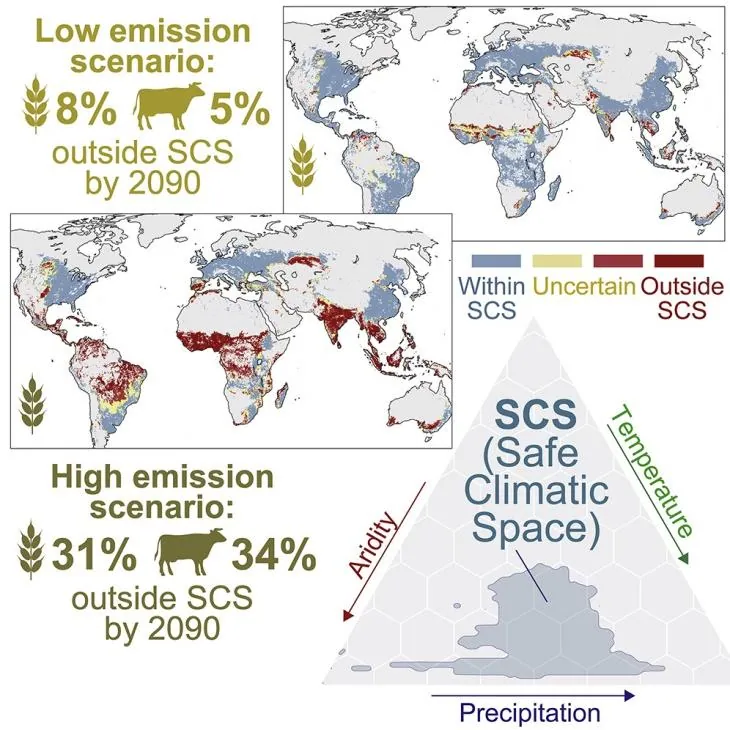
Kummu et al. [4] predict that one third of the world's crop production and more than 30% of animal production may be displaced outside stable climate conditions by 2081–2100 if warming is not limited to 1.5–2°C. In principle, there are direct and indirect impacts of climate change [5]. Climate change and CO2's effects on livestock metabolism, immune function, and temperature regulation are referred to as direct impacts. Indirect impacts arise from climate impacts on livestock feed, water accessibility, and pest/pathogen communities.
Heat Stress
The production performance of animals is highly dependent on the environmental conditions in which they are raised. The optimum ratio of temperature, humidity, and airflow is called the thermal comfort zone and is species-specific. In this zone, the animal is able to achieve optimal production performance with minimal energy spending [5]. When the temperature rises above this range, heat stress occurs and the animal's organism expends additional energy to regulate body temperature, which negatively affects productivity. If the animal provides an appropriate phenotypic response to the effect of the thermal stressor, we say that it has adapted, i.e. acclimatized [3]. Heat stress caused by high temperature is a bigger problem and has a greater effect than stress caused by low temperature [6]. Against the backdrop of climate change, the global increase in temperature means that greater importance is attached to thermal stress caused by the effects of high temperatures. Therefore, heat stress is generally considered to be the dominant topic in consideration of thermal stress.
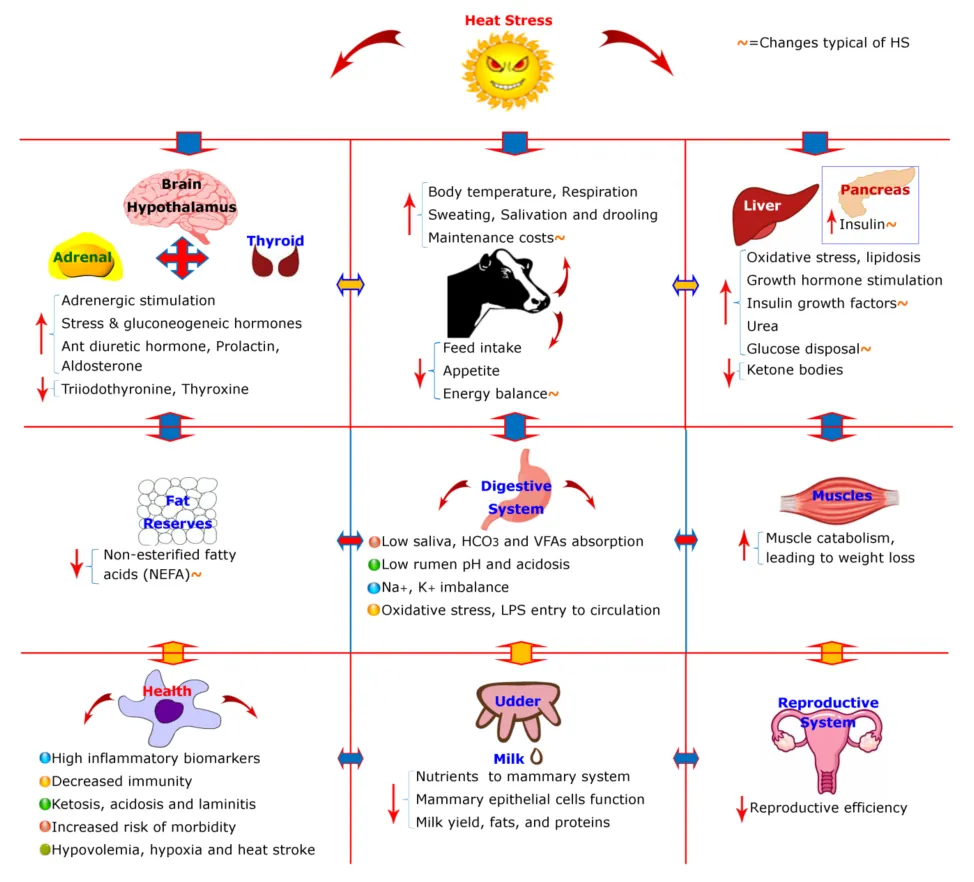
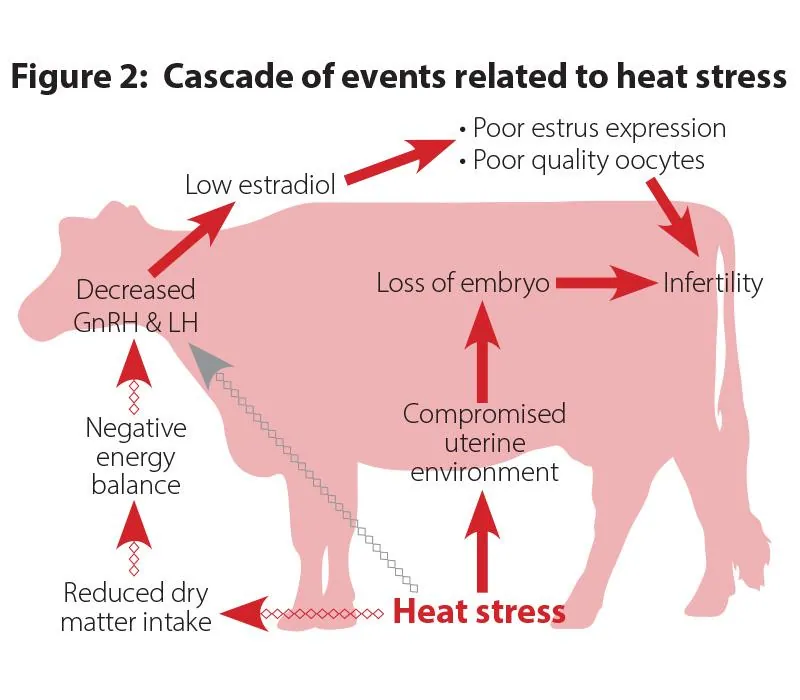
When animals are unable to emit enough heat to maintain homeothermy, heat stress develops [7]. After "overheating" there is accelerated respiration and tachycardia, along with an increase in body temperature. As a result, there may be alterations in mortality and immune system operation, as well as decreased food intake, milk production, and reproductive effectiveness. A summary of the various physiological and biochemical changes associated with heat stress that occur at different systemic levels in the body of dairy cows are shown in Figure 2.
When considering climate change issues, it is important to emphasize the adaptability of animals. Compensation and adaptation mechanisms that are activated during heat stress play an important role. Although their initiation can lead to a decrease in animal productivity, achieving homeothermy and homeostasis as conditions for survival is the primary goal. During heat stress, the humoral system plays a crucial role in regulating homeostasis via the hypothalamic-pituitary-adrenal axis. The main result of this interaction is the reduction in the level of growth hormone and thyroxine, which reduces the activity of basal metabolism. Given the effects of climate change, there are ways to resist them at the cellular level, ie. genes. Based on the so-called heat shock proteins, which play a crucial role in adapting to heat stress, corresponding genes responsible for acclimatization at the cellular level were also identified. In the genome of animals living in warmer climates, such genes are more common, which in the future can be used with advanced biotechnological methods to modify the genotype with a view to adaptation to climate change [8].
Feed Intake
One of the responses to a hot environment is decreased food intake. Increased heat stress in ruminants was linked to reduced hunger, intestinal velocity, and ruminating [9]. As the ambient temperature rises over 25–26°C, and especially beyond 30°C, feed intake falls in dairy cows [10].
Compared to other ruminants, goats are less vulnerable to heat stress. When the outside temperature is more than 10°C over their thermal comfort zone, however, their voluntary food intake declines [11]. When the temperature rises from 20 to 35 °C, pigs under heat stress have higher body temperatures and their feed intake falls by about 11% [12]. Such effects persist even after the cessation of exposure of animals to heat stress. Therefore, it has been proposed that early morning feeding might aid prevent reduced food intake [13].
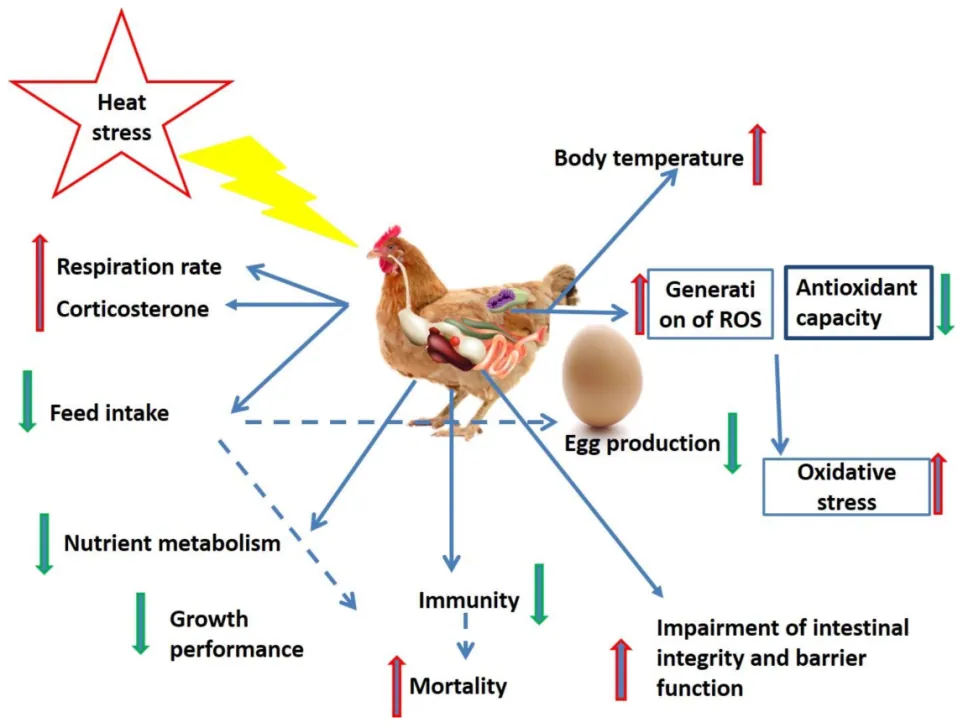
Poultry was also found to have reduced feed intake at high temperatures. A temperature increase of approximately 10°C in poultry from hatching to 6 weeks of age resulted in a reduction in feed consumption of almost 10% [14]. Consequently, this was reflected in the reduction in feed conversion efficiency and daily gain [15]. The given relationships are shown in Figure 3.
Production
Generally, in all livestock species, reduced feed intake due to heat stress leads to reduced production of milk, meat and eggs, which in turn leads to financial losses. Dairy cows under heat stress reduce their intake of dry matter, which explains approximately 35% of the reduction in milk production [16]. In addition, more productive breeds show greater sensitivity to heat stress than breeds of lower production since they emit more metabolic heat due to their larger size. Consequently, with the increase in metabolic heat production caused by heat stress, there is a decrease in milk production. Moderate heat stress during lactation causes feed intake reductions, metabolic alterations, and compromised mammary gland formation in dairy cows, which results in 25–40% fewer milk production [17].
In addition to heat, the yield and composition of milk is also affected by the humidity of the environment, that is, their interaction expressed through the heat-humidity index (THI). It was found that lactating cows begin to suffer from heat stress when the values of this index are above 72, and that the content of milk proteins and milk fat decreases with its increase. Lactose and protein content can be about 49% lower as a result of heat stress [18]. Similar changes in the composition of milk were also found in dairy breeds of goats and buffaloes, but in a small number of studies. Thus, in goats under the influence of elevated temperature, a decrease of 12%, 3–10% and 4% was observed in growth, milk and meat production, respectively [11, 19, 20].
Probably due to altered placental hormone synthesis and decreased intake of dry matter [22], heat stress during the final 50 days of gestation in dairy cows impairs mammary development and decreases colostrum and milk yield [21].
Studies have shown that heat stress adversely affects meat production [23]. In ruminants under the influence of heat stress, there is decrease in growth, carcass weight and fat tissue thickness, followed by lower meat quality [24]. There are indications that heat stress through lower food intake and reduced availability of glycogen in muscles can be reflected in the appearance of dark meat [25]. However, studies have shown that small ruminants (goats and sheep) compared to large ones, show greater adaptation to a warm and humid environment [26]. Cattle reared in feedlots are a significantly more vulnerable category because captivity limits their ability for adequate cooling (shade, water, wind) as well as due to exposure to rough radiating surfaces and feeding by high-energy nutrients [3].
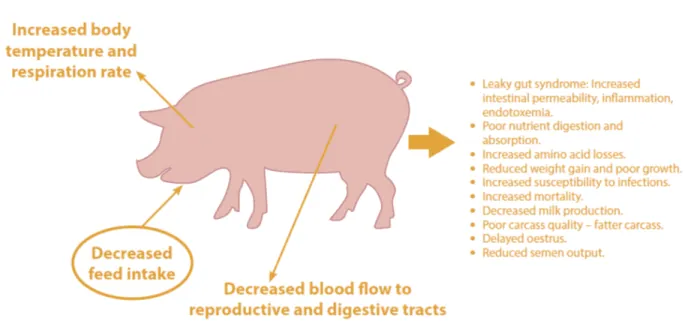
Pigs, similarly to ruminants, decrease in growth, carcass weight, intramuscular fat content and meat quality when exposed to high temperature. It was found that the daily gain in pigs can decrease by 10% under the influence of high temperatures [27]. The physiological response and consequences of heat stress in pigs are schematically shown in Figure 4. Traditionally, these changes were believed to be due to reduced feed intake, but recent studies have shown that heat stress itself also reduces metabolic rate and alters post-absorptive metabolism, without regardless of reduced food intake [28].
Poultry that are confronted with heat stress use more energy to retain thermal homeostasis at the cost of growth. In broilers under heat stress, a decrease in growth, feed conversion rate, breast muscle mass and protein content in meat was found [14, 15]. The traits that demonstrated the highest level of vulnerability to heat stress in laying hens were eggshell strength, daily feed intake, egg mass, and egg production [15, 29].
Reproduction
Both sexes are influenced by heat stress on reproduction. Heat stress shortens the estrus cycle and decreases fertility in females while raising of anestrous occurrence and prenatal mortality. Males that experience heat stress have poorer sperm quality, smaller testicles, and less fecund semen overall. Both sexes showed significant seasonal changes in reproductive efficiency [30, 31].
Although poultry reproduction is also affected by heat stress, there appear to be some differences compared to the performance found in mammals. Male broilers are more sensitive to heat-induced infertility than females [30]. In laying hens, environmental stress can delay the ovulation process, reduce yolk quality, and affect egg production [31].
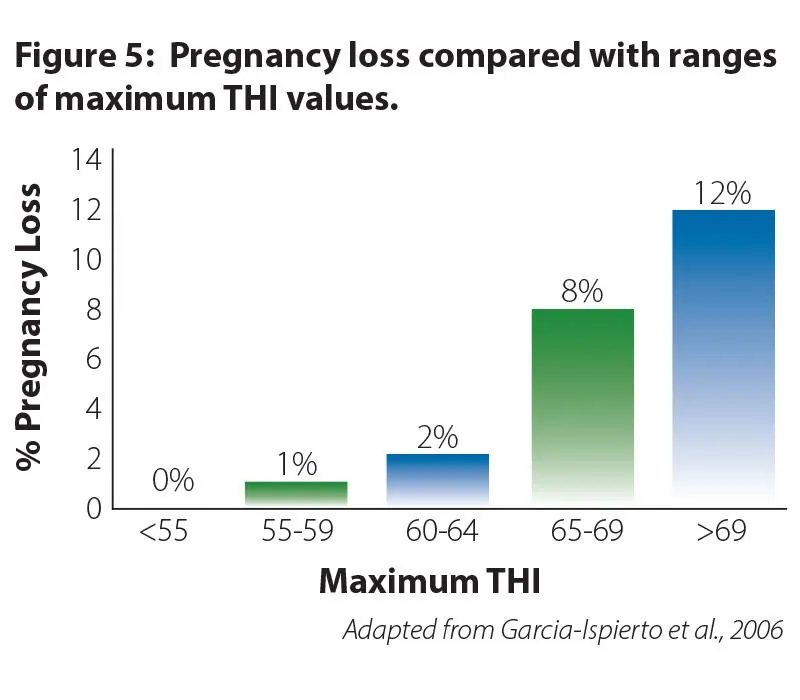
Reduced reproductive performance of dairy and fattening breeds during the summer can be particularly costly for the producer. Gestational and lactating dairy cows are particularly prone to increased metabolic heat due to their high-energy diets, high feed intake and metabolic activity required for digestion and milk production (Figure 5). These factors can reduce the conception rate by 10-20% but also cause losses during pregnancy [32]. The correlation between THI and pregnancy loss rate is shown in Figure 6 [33].
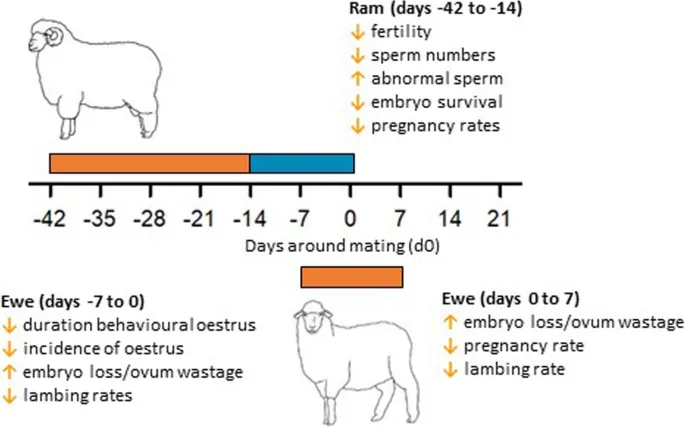
Short-term and long-term exposure to heat stress significantly impairs sheep fertility, and reduces semen production and ram quality, resulting in fewer lambs per ewe (Figure 7). Also, a decrease in the body weight of lambs at birth and a weaker development of the mammary glands of sheep as a result of heat stress during pregnancy can reduce the survival and weight of lambs at weaning [34].
Health
Climate change, especially global warming, affects animal health directly and indirectly [3]. In this chapter, diseases caused by the action of both influences will be dealt with, since they certainly relate to animal health. Direct impacts include vector-borne diseases, as well as those caused by water (e.g., flooding), soil, temperature, and moisture, or transmitted by rodents. Climate change can lead to the conversion of land use and disruption of biological diversity resulting in various adaptive changes in animals. In addition, the indirect effects of climate change on animal health are considered to be those that lead to the modification of microbial communities, changes in the host's immune and general response to pathogens, starvation, and food poisoning.
The intensity of the impact of climate change on the health of livestock depends on several factors, such as genotype, specific and non-specific disease resistance of animals, rearing areas, as well as on the characteristics of pathogens [3]. The immune system plays a critical role in ensuring adequate health, but heat stress can significantly disrupt its defense function [35]. High temperatures and changes in the precipitation regime favor the development and spread of pathogens and consequently can alter their distribution and lead to the emergence of new diseases [36]. As a result of the immunosuppressive effect of heat stress, livestock becomes more susceptible to disease, leading to an increase in morbidity and mortality rates in herds [3].
Heat stress can affect livestock health in other ways as well. Thus, under the influence of several hours of heat stress, pigs can develop symptoms of gastro-intestinal disorders [37]. Exposure to high ambient temperatures in broilers and laying hens leads to unfavorable changes in the gut microbiome [38].
It is important to note that, especially in developing countries, the impact of climate change on livestock disease occurrence is more difficult to assess compared to other impacts [3].
Mortality
Increased mortality of farm animals as a result of heat stress can have a significant negative economic effect. Excessive heat strain elevates the mortality rate, according to studies in pigs and dairy cows [39]. It has also been found that hot and humid weather poses a greater threat to the lives of cows and pigs than dry and warm weather, and temperatures above 37.7°C with humidity levels of over 50% are hazardous [40].
Compared to mammals, poultry has a higher and more fluctuating body temperature and are also more susceptible to heat stress. An ambient temperature of up to 27°C or a body temperature of up to 41 °C may be considered suitable for rearing chickens. However, lethal outcomes for chickens occur when the body temperature increases by 4°C [41].
References
Food and Agriculture Organization of the United Nations (FAO). Livestock and Landscapes: Sustainability Pathways. Food and Agriculture Organizations of the United Nations. Available online: https:/ /www.fao.org/3/ar59le/ ar59le.pdf (accessed on 16 Аugust 2022).
Rojas-Downing, M. M., Nejadhashemi, A. P., Harrigan, T., & Woznicki, S. A. (2017). Climate change and livestock: Impacts, adaptation, and mitigation. Clim. Risk Manag. 16, 145-163.
Cheng, M., McCarl, B., & Fei, C. (2022). Climate Change and Livestock Production: A Literature Review. Atmosphere 13, 140. https://doi.org/10.3390/atmos13010140
Kummu, M., Heino, M., Taka, M., Varis, O., & Viviroli, D. (2021). Climate change risks pushing one-third of global food production outside the safe climatic space, One Earth 4, 5, 720-729. https://doi.org/10.1016/j.oneear.2021.04.017.
Collier, R. J., Baumgard, L. H., Zimbelman, R. B., & Xiao, Y. (2019). Heat stress: Physiology of acclimation and adaptation. Anini. Front. 9, 12-19.
Maibam, U., Hooda, O. K., Sharma, P. S., Upadhyay, R. C., & Mohanty, A. K. (2018). Differential level of oxidative stress markers in skin tissue of zebu and crossbreed cattle during thermal stress. Livest. Sci. 207, 45-50.
Sammad, A., Wang, Y. J., Umer, S., Lirong, H., Khan, I., Khan, A., Ahmad, B., & Wang, Y. (2020). Nutritional Physiology and Biochemistry of Dairy Cattle under the Influence of Heat Stress: Consequences and Opportunities. Animals 10, 793.
Collier, R. J., Gebremedhin, K., Macko, A. R & Roy, K. S. (2012). Genes involved in the thermal tolerance of livestock. In: Environmental stress and amelioration in livestock production. Sejian, V., Naqvi, S. M. K., Ezeji, T., Lakritz, J. and Lal, R. (Eds), Springer-Verlag GMbH Publisher, Germany, 379-410.
Yadav, B., Singh, G., Verma, A. K., Dutta, N., & Sejian, V. (2013). Impact of heat stress on rumen functions. Vet. World 6, 992-996.
Kadzere, C. T., Murphy, M. R., Silanikove, N., & Maltz, E. (2022). Heat stress in lactating dairy cows: A review. Livest. Prod. Sci. 77, 59-91.
Salama, A. A. K., Caja, G., Hamzaoui, S., Badaoui, B., Castro-Costa, A., Façanha, D. A. E., Guilhermino, M. M., & Bozzi, R. (2014). Different levels of response to heat stress in dairy goats. Small Rumin. Res. 121, 73–79.
Lopez, J., Jesse, G. W., Becker, B. A., & Ellersieck, M. R. (1991). Effects of temperature on the performance of finishing swine: I. Effects of a hot, diurnal temperature on average daily gain, feed intake, and feed efficiency. J. Anim. Sci. 69, 1843-1849.
Cervantes, M., Antoine, D., Valle, J. A., Vasquez, N., Camacho, R. L., Bernal, H., & Morales, A. (2018). Effect of feed intake level on the body temperature of pigs exposed to heat stress conditions. J. Therm. Biol. 76, 1-7.
Shakeri, M., Cottrell, J. J., Wilkinson, S., Ringuet, M., Furness, J. B., & Dunshea, F. R. (2018). Betaine and Antioxidants Improve Growth Performance, Breast Muscle Development and Ameliorate Thermoregulatory Responses to Cyclic Heat Exposure in Broiler Chickens. Animals 8, 162.
Shehata, A. M., Saadeldin, I. M., Tukur, H. A., & Habashy, W. S. (2020). Modulation of Heat-Shock Proteins Mediates Chicken Cell Survival against Thermal Stress. Animals 10, 2407.
Rhoads, M., Rhoads, R., VanBaale, M. J., Collier, R., Sanders, S. R., Weber, W. J., Crooker, B. A., & Baumgard, L. H. (2009). Effects of heat stress and plane of nutrition on lactating Holstein cows: I. Production, metabolism, and aspects of circulating somatotropin. J. Dain; Sci. 92, 1986-1997.
Tao, S., Dahl, G., Laporta, J., & Bernard, J. (2018). Effects of heat stress during late gestation on the dam and its calf. J Anim Sci. 96. https://doi.org/10.1093/jas/skz061.
Garner, J. B., Douglas, M., Williams, S. R. O., Wales, W. J., Marett, L. C., Di Giacomo, K., Leury, B. J., & Hayes, B. J. (2017). Responses of dairy cows to short-term heat stress in controlled-climate chambers. Anim. Prod. Sci. 57, 1233–1241.
Pragna, P., Sejian, V., Bagath, M., Krishnan, G., Archana, P. R., Soren, N. M., Beena, V., & Bhatta, R. (2018). Comparative assessment of growth performance of three different indigenous goat breeds exposed to summer heat stress. J. Anim. Physiol. Anim. Nutr. 102, 825–836.
Hashem, M. A., Hossain, M. M., Rana, M. S., Islam, M. S., & Saha, N. G. (2013). Effect of heat stress on blood parameter, carcass and meat quality of Black Bengal goat. Bangladesh J. Anim. Sci. 42, 57–61.
Dado-Senn, B., Skibiel, A. L., Fabris, T. F., Dahl, G. E., & Laporta, J. (2019). Dry period heat stress induces microstructural changes in the lactating mammary gland. PloSOne 14
Dahl, G. E., Tao, S., & Laporta, J. (2017). Triennial Lactation Symposium/Bolfa: Late gestation heat stress of dairy cattle programs dam and daughter milk production. J Anim Sci. 95
Gonzalez-Rivas, P. A., Chauhan, S. S., Ha, M., Fegan, N., Dunshea, F. R., & Warner, R. D. (2020). Effects of heat stress on animal physiology, metabolism, and meat quality: A review. Meat Sci. 162, 108025
Summer, A., Lora, I., Formaggioni, P., & Gottardo, F. (2019). Impact of heat stress on milk and meat production. Anim. Front. 9, 39-46
Lees, A. M., Sejian, V., Wallage, A. L., Steel, C. C., Mader, T. L., Lees, J. C., & Gaughan, J. B. (2019). The Impact of Heat Load on Cattle. Animals 9, 322.
Berihulay, H., Abied, A., He, X., Jiang, L., & Ma, Y. (2019). Adaptation Mechanisms of Small Ruminants to Envirornnental Heat Stress. Animals 9, 75.
da Fonseca de Oliveira, A. C., Vanelli, K., Sotomaior, C. S., Weber, S. H., & Costa, L. B. (2019). Impacts on performance of growing-finishing pigs under heat stress conditions: A meta-analysis. Vet. Res. Commun. 43, 37-43.
Ma, X., Wang, L., Shi, Z., Shi, Z., Chen W., Yang, X., Hu, Y., Zheng, C., & Jiang, Z. (2019). Mechanism of continuous high temperature affecting growth performance, meat quality, and muscle biochemical properties of finishing pigs. Genes. Nutr. 14, 23.
Oguntunji, A. O., & Alabi, O. M. (2010). Influence of high environmental temperature on egg production and shell quality: A review. World's Poult. Sci. J. 66, 739-750.
Nawab, A., Ibtisham, F., Li, G., Kieser, B., Wu, J., Liu, W., Zhao, Y., Nawab, Y., Li, K., Xiao, M., An, L. (2018). Heat stress in poultry production: Mitigation strategies to overcome the future challenges facing the global poultry industry. J. Therm. Biol. 78, 131-139.
Ayo, J. O., Obidi, J. A., & Rekwot, P. I. (2011). Effects of Heat Stress on the Well-Being, Fertility, and Hatchability of Chickens in the Northern Guinea Savannah Zone of Nigeria: A Review. ISRN Vet. Sci. 14, 838606.
Hansen, P. J. (1997). Effects of environment on bovine reproduction. (p403-415) In: Current Therapy in Large Animal Theriogenology. R. S. Youngquist (Ed). W. B. Saunders, Philadelphia.
García-Ispierto, I., López-Gatius, F., Santolaria, P., Yániz, J.L., Nogareda, C., López-Béjar, M., & De Rensis, F. (2006). Relationship between heat stress during the peri-implantation period and early fetal loss in dairy cattle. Theriogenology 65, 799-807.
van Wettere, W. H. E. J., Kind, K. L., Gatford, K. L., Swinbourne, A. M., Leu, S. T., Hayman, P. T., Kelly, J. M., Weaver, A. C., Kleemann, D.O., & Walker, S. K. (2021). Review of the impact of heat stress on reproductive performance of sheep. J Animal Sci Biotechnol 12, 26.
Bagath, M., Krishnan, G., Devara, C., Rashamol, V. P., Pragna, P., Lees, A. M., & Sejian, V. (2019). The impact of heat stress on the immune system in dairy cattle: A review. Res. Vet. Sci. 126, 94-102
Paull, S. H., Raffel, T. R., La Fonte, B. E., & Johnson, P. T. J. (2015). How temperature shifts affect parasite production: Testing the roles of thermal stress and acclimation. Funct. Ecol. 29, 941-950.
Pearce, S. C., Sanz-Fernandez, M. V., Hollis, J. H., Baumgard, L. H., & Gabler, N. K. (2014). Short-term exposure to heat stress attenuates appetite and intestinal integrity in growing pigs. J. Anim. Sci. 92, 5444-5454.
Zhu, L., Liao, R., Wu, N., Zhu, G., & Yang, C. (2019). Heat stress mediates changes in fecal microbiome and functional pathways of laying hens. Appl. Microbial. Biotechnol. 103, 461-472.
Vitali, A., Felici, A., Esposito, S., Bernabucci, U., Bertocchi, L., Maresca, C., Nardone, A., Lacetera, N. (2015). The effect of heat waves on dairy cow mortality. J. Dairy Sci. 98, 4572-4579.
Jeffrey, F., & Keown, R. J. G. (2022). How to Reduce Heat Stress in Dairy Cattle. University of Missouri Extension. Available online: https://extension.missouri.edu/publications/g3620 (accessed on 12 September 2022).
Saeed, M., Abbas, G., Alagawany, M., Kamboh, A. A., Abd El-Hack, M. E., Khafaga, A. F., & Chao, S. (2019). Heat stress management in poultry farms: A comprehensive overview. J. Therm. Biol. 84, 414-425.